


hearing about the revolutionary specs of solid-state batteries makes every pilot want to upgrade immediately. We all want double the flight time and zero fire risk, but the reality of swapping out your current battery is complicated.
Currently, you cannot simply replace a standard drone battery with a solid-state one for most consumer models. Compatibility issues with Battery Management Systems (BMS), physical dimensions, voltage curves, and a lack of retail availability make direct replacement difficult. Solid-state technology is primarily available only for custom industrial applications right now.

As a manufacturer, I get this question constantly. Pilots see the news about 500Wh/kg energy density and want to buy a pack for their Mavic or FPV racer. Unfortunately, battery technology is not like swapping AA batteries in a remote control. It is a deeply integrated part of the drone's power system.
Why is it so hard to find a compatible solid state battery?
You search online shops hoping to find a "solid state" upgrade for your drone, but you come up empty-handed. It is frustrating when the technology exists but you cannot buy it.
The main barrier is that mass-market drones are designed strictly for liquid lithium-ion voltage curves and behaviors. Solid-state batteries function differently, and without a compatible BMS and physical fit, they will not work or could even damage your drone electronics.
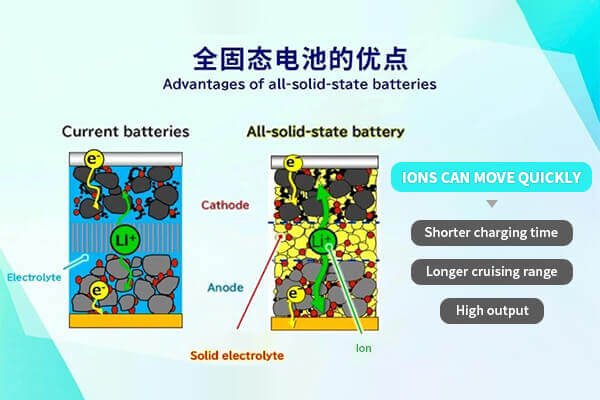
The Supply and Tech Reality Let's dig into why you cannot find these on Amazon yet. First, look at the market supply. True solid-state batteries are currently in the "high-end industrial" and "military prototype" phase. As a manufacturer, I know that producing these cells requires expensive, complex environments. We are not churning them out by the millions for consumer retail yet. The cost is simply too high for the average user.
The "Handshake" Problem Even if you found a solid-state cell, your drone might reject it. Modern drones use "smart" batteries. The drone's computer talks to the battery's computer (BMS).
- Voltage Mismatch: Solid-state cells often have different nominal voltages compared to standard LiPos. If you plug a 4.4V cell into a system expecting a 4.2V max, you might fry the Electronic Speed Controller (ESC).
- Software Locks: Companies like DJI use proprietary firmware. If the battery does not send the correct security code, the drone will refuse to take off. Solid-state manufacturers have not cracked these proprietary codes yet.
- Physical Constraints: Solid-state batteries can be made in different shapes, but your drone has a fixed battery bay. If the energy density is higher but the shape is wrong, it physically won't fit.
| Feature | Traditional LiPo | Solid State Battery | Compatibility Status |
|---|---|---|---|
| Voltage Curve | Standard (3.7V - 4.2V) | Variable (often higher) | Risk of ESC Damage |
| BMS Protocol | Established / Proprietary | New / Custom | Connection Failure |
| Physical Size | Standardized bricks | Thin layers / Custom | Fitment Issues |
| Availability | Everywhere | Industrial / Lab only | Hard to Buy |
Is there a middle ground available right now?
Waiting for 2027 for full solid-state availability feels like an eternity. You need better performance today, not five years from now.
Yes, "Semi-Solid" batteries are the current bridge technology available for specialized upgrades. These hybrid batteries offer higher energy density and safety than standard LiPos and are easier to manufacture, making them available for specific industrial drone models right now.
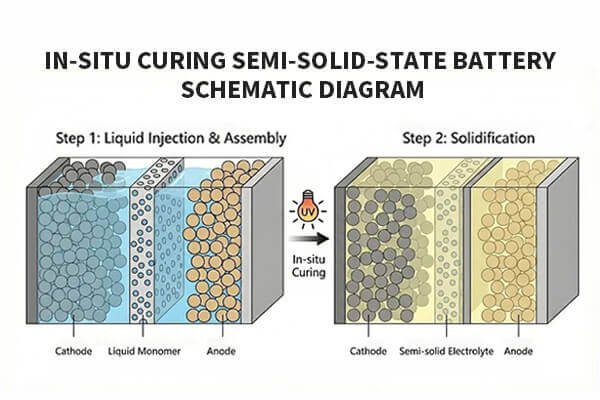
Understanding the "Semi-Solid" Bridge Since full solid-state is hard to buy, the industry has moved to "Semi-Solid" or "Condensed State" batteries. This is what I often recommend to my B2B clients like Omar who need an upgrade immediately.
- What is it? It is a hybrid. It contains some liquid electrolyte (about 5-10%) to ensure good conductivity, but uses advanced materials to hold more energy.
- The Benefit: They are safer than standard liquid batteries and lighter. You might see a 20-30% increase in flight time compared to a standard pack.
- Availability: Brands like CATL and even some of our production lines at KKLIPO are working with these. You can find semi-solid packs for large agricultural drones or mapping VTOLs.
- The Catch: Just like full solid-state, these are mostly for the industrial market. If you have a custom-built drone or an open-source platform (like Ardupilot/PX4 based), you can buy these cells and build a pack. But for a closed-system consumer drone, you are still likely out of luck unless the manufacturer releases an official "Plus" battery using this tech.
Should you try to upgrade or stick with traditional Lithium Polymer?
You don't want to waste money on hype, but you also don't want to be left behind. Making the wrong choice can be expensive or dangerous.
Stick to high-quality traditional LiPo batteries unless you have a specific industrial requirement. Only consider upgrading to solid or semi-solid technologies if your mission demands extreme endurance or operates in highly sensitive areas where fire safety is non-negotiable, and always verify compatibility first.
Analyzing Your Real Needs Before you go hunting for exotic batteries, ask yourself why you need them.
- For Hobby/Photography: If you fly for fun, the cost of solid-state is not worth it. A standard LiPo gives you 30 minutes. A solid-state might give you 45, but it could cost 5 times as much. The math does not work out. Stick to official OEM batteries to keep your warranty intact.
- For Industry (The "Omar" Scenario): If you are inspecting oil pipelines or flying over dry forests, safety is key. Here, the cost is secondary. A fire caused by a crash could cost millions in damages. In this case, I advise contacting manufacturers (like us) directly to see if a custom semi-solid solution can be built for your airframe.
Safety Warning: Don't Hack It I see forums where people try to hack different cells into their battery cases. Do not do this.
- Discharge Rate (C-Rating): Solid-state batteries often have lower continuous discharge rates than high-performance LiPos. If your drone tries to pull 100 Amps for a punch-out and the solid-state battery can only give 50 Amps, your voltage will sag instantly, and your drone will fall out of the sky.
- Charging: You cannot charge a solid-state battery with a standard LiPo charger program. You risk damaging the expensive cell or causing a fault.
The Roadmap
- Now: Semi-solid is entering the B2B market.
- 2025-2026: We expect more "High Density" options for prosumer drones.
- 2027+: Full solid-state might become standard for high-end gear.
Conclusion
Directly replacing your battery with a solid-state one is currently not feasible for most users due to compatibility and supply issues. For now, stick to quality LiPos or look for semi-solid options if you run professional custom platforms.