

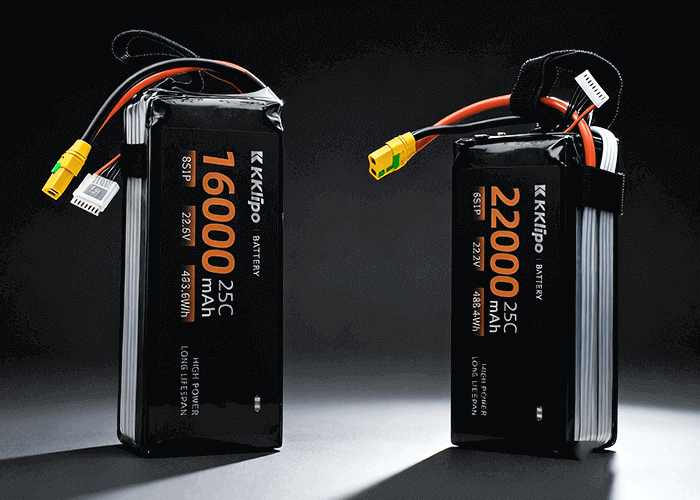
You're trying to compare drone batteries from different suppliers, but their spec sheets are inconsistent. One lists capacity in mAh, another in Wh, making a direct, fair comparison impossible and leaving you unsure which battery offers more energy.
To calculate Watt-hours (Wh), you need two key values: the battery's voltage (V) and its capacity in Amp-hours (Ah). The formula is simple: Watt-hours = Volts × Amp-hours. This gives you the battery's total energy capacity.
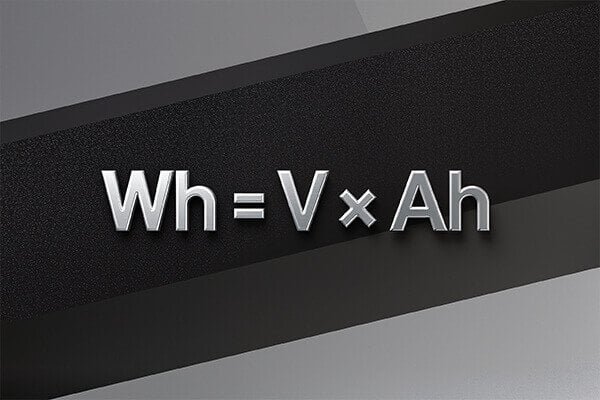
As a procurement manager for high-performance drones, you need a standard unit to compare batteries objectively. Watt-hours are that standard. It's the "apples-to-apples" metric for battery energy. Relying on milliamp-hours (mAh) alone can be misleading, as it doesn't account for voltage differences. I've seen clients purchase batteries with a high mAh rating, only to discover they provided less flight time than a lower mAh battery with a higher voltage. Mastering the Watt-hour calculation is the only way to ensure you are making a truly informed decision.
How Do I Find the Numbers to Calculate Watt-Hours?
You have a drone battery in your hand, but the spec sheet is missing or unclear. You need to calculate its Watt-hours to evaluate it, but you don't know where to find the necessary voltage and capacity information.
You can almost always find the Voltage (V) and capacity (in mAh or Ah) printed directly on the battery's label. If capacity is in milliamp-hours (mAh), you must first divide it by 1,000 to get Amp-hours (Ah) before calculating.
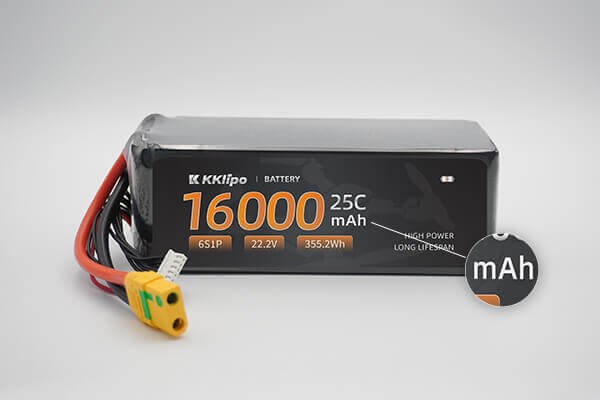
Let's use a common KKLIPO battery as a real-world example. Imagine you have our 6S 16000mAh battery pack.
Step 1: Find the Voltage (V) The term "6S" tells you the number of cells connected in series. For a standard LiPo battery, each cell has a nominal voltage of 3.7V.
- Voltage Calculation:
6 cells × 3.7 V/cell = 22.2 VoltsThis 22.2V value is almost always printed on the battery label as well.
Step 2: Find the Amp-hours (Ah) The label says "16000mAh". To use our formula, we need to convert this to Amp-hours.
- Capacity Conversion:
16000 mAh / 1000 = 16 Ah
Step 3: Calculate the Watt-hours (Wh) Now, you simply multiply the two values you found.
- Final Calculation:
22.2 V × 16 Ah = 355.2 Wh
So, this battery has a total energy capacity of 355.2 Watt-hours. You can now use this standardized number to compare it against any other battery, regardless of its voltage or how its capacity is advertised.
Why is Calculating Wh More Reliable Than Using mAh?
You're comparing two batteries. Battery A is 20,000 mAh. Battery B is only 16,000 mAh. On paper, Battery A seems superior. But relying on mAh alone can be a costly mistake that leads to shorter flight times.
Watt-hours (Wh) are more reliable because they represent the battery's total energy, while milliamp-hours (mAh) only represent charge capacity and are meaningless without the context of voltage. A lower mAh battery with a higher voltage can contain more total energy.

Let's look at that comparison in detail. This is a scenario I walk my B2B clients through all the time, especially when they are evaluating suppliers from Russia or the Middle East where spec sheets can vary.
The mAh Trap: A Real-World Comparison
| Specification | Battery A | Battery B (KKLIPO) |
|---|---|---|
| Capacity | 20,000 mAh (20 Ah) | 16,000 mAh (16 Ah) |
| Voltage | 14.8V (4S) | 22.2V (6S) |
| Energy (Wh) | 14.8V × 20Ah = 296 Wh | 22.2V × 16Ah = 355.2 Wh |
Analysis: Even though Battery A has a 25% higher mAh rating, it holds nearly 20% less total energy than Battery B. If you had chosen Battery A based on its impressive "20,000 mAh" number, you would have ended up with significantly shorter flight times for your drone fleet.
This is why, at KKLIPO, we always emphasize the Watt-hour rating. It is the only true and honest measure of a battery's energy content. As a procurement manager, making Wh your primary metric for comparison protects you from misleading marketing and ensures you are purchasing the battery that actually delivers the most flight time.
How Can I Use Watt-Hours to Estimate Flight Time?
You've calculated the Watt-hours for your batteries. Now you need to translate that number into a practical estimate of how long your drones can stay in the air. This helps you plan missions and manage fleet operations effectively.
You can estimate flight time by dividing the battery's total Watt-hours (Wh) by the drone's average power consumption in Watts (W). The result will be the theoretical flight time in hours. Time (h) = Energy (Wh) / Power (W).
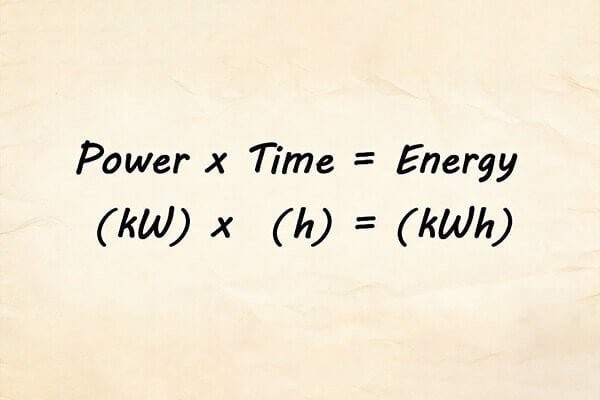
This calculation gives you a baseline to work from. Let's use our 355.2 Wh battery again.
Step 1: Determine Your Drone's Average Power Consumption You need to know how much power your drone uses while hovering. You can find this in the drone's technical manual, or you can measure it with a power meter. Let's assume your industrial drone consumes an average of 700 Watts while hovering.
Step 2: Apply the Formula
- Calculation:
355.2 Wh / 700 W = 0.507 hours
Step 3: Convert to Minutes for a Practical Number
- Conversion:
0.507 hours × 60 minutes/hour ≈ 30.4 minutes
Important Considerations: This calculation provides a theoretical maximum. Real-world flight time will be slightly less due to factors like:
- Flight Style: Aggressive maneuvers use more power than gentle hovering.
- Payload: A heavier payload increases power consumption.
- Environmental Conditions: Flying in high winds or extreme temperatures (common in Jordan or Russia) requires more energy.
- Safety Margin: You should never fly a battery down to 0%. Most operators land with 15-20% charge remaining.
Even with these variables, calculating the theoretical flight time from Watt-hours gives you a solid, data-driven starting point for mission planning and comparing the real-world performance of different batteries.
Conclusion
To calculate Watt-hours, simply multiply a battery's Voltage (V) by its Amp-hour (Ah) capacity. This single number, Wh, is the most reliable metric for comparing the total energy storage of different drone batteries.