


Flying a drone in 50°C desert heat is a nightmare for standard equipment. Swelling battery packs and mid-air power failures threaten your mission, but solid-state technology offers a cooler, safer solution for these extreme environments.
Solid-state batteries perform exceptionally well in hot climates like the UAE because they lack liquid electrolytes that boil or swell. They remain stable at temperatures exceeding 100°C, preventing thermal runaway and maintaining consistent power output where traditional Lithium Polymer batteries would fail or catch fire.

You might assume that all batteries suffer equally under the scorching sun, but the chemical difference inside these new cells turns a dangerous flight into a routine operation.
Will a solid state battery catch fire in the desert sun?
Fear of fire is constant when operating in high heat. Standard LiPos become ticking time bombs when the temperature spikes, but solid-state tech removes the fuse.
Solid-state electrolytes are non-flammable, meaning they do not ignite even if the internal temperature rises significantly. This eliminates the risk of spontaneous combustion common with liquid batteries in extreme heat, making them the safest choice for desert operations.
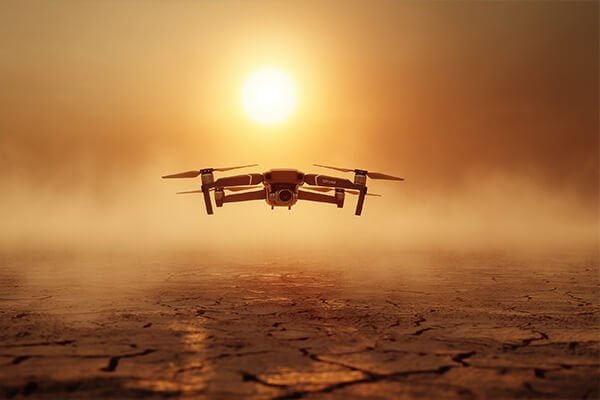
The Chemistry of Safety As a manufacturer at KKLIPO, I see the damage heat does to standard batteries every day. In a traditional Lithium Polymer (LiPo) battery, the electrolyte is a liquid solvent. When the ambient temperature in a place like Dubai hits 45°C or 50°C, the internal temperature of the battery during flight can easily pass 70°C.
- The Liquid Failure: At these temperatures, liquid electrolytes start to vaporize. This creates gas inside the sealed pouch. This is why your batteries get "puffy" or swollen. If that pressure gets too high, or if there is a spark, the liquid catches fire.
- The Solid Solution: Solid-state batteries replace that liquid with a solid material, usually a ceramic or a polymer. Solids do not boil. They do not turn into gas.
- Real World Testing: In our labs, we perform "Hot Box" tests where we heat batteries to 150°C. Standard batteries explode. Solid-state batteries just get hot, but they stay intact. For a procurement manager like Omar, this means you can store batteries in a hot warehouse or a vehicle trunk without worrying about burning down your facility.
Safety Comparison Table:
| Feature | Standard LiPo Battery | Solid-State Battery |
|---|---|---|
| Electrolyte State | Liquid / Gel (Flammable) | Solid (Non-flammable) |
| Swelling Risk | High above 60°C | Almost Zero |
| Thermal Runaway | Common in extreme heat | Extremely Rare |
| Flash Point | Low (Easy to ignite) | None (Does not burn) |
Does high heat affect the flight time and performance?
Heat usually kills efficiency. You often lose valuable flight minutes when the cooling fans work overtime and the battery chemistry degrades, but solid-state changes the curve.
Unlike liquid batteries that degrade rapidly in heat, solid-state cells maintain stable voltage and capacity. They experience less internal resistance buildup, allowing your drone to fly longer and more reliably even during the hottest part of the day.
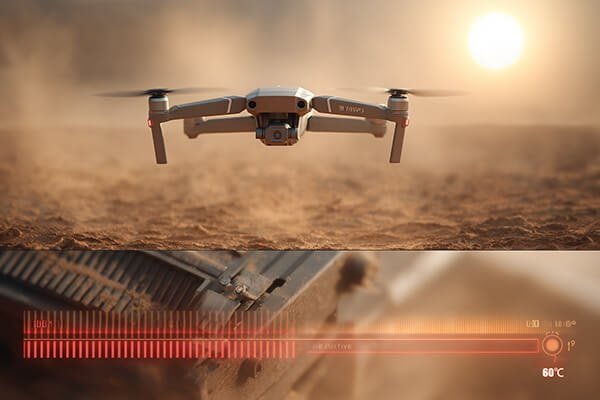
Why They Perform Better Hot It sounds strange, but solid-state batteries actually like the heat to a certain degree.
- Ionic Conductivity: In solid electrolytes, the ions (the energy carriers) actually move faster when they are warm. This reduces the internal resistance of the battery.
- No "Voltage Sag": In a standard battery, heat damages the internal chemistry, causing the voltage to drop suddenly under load. Your drone might say "30% battery" and then suddenly force a landing. Solid-state batteries hold a stiff, steady voltage curve even when hot.
- Less Cooling Weight: Because the battery is thermally stable up to 100°C, drone designers do not need to add heavy cooling fans or heatsinks to the battery bay. Lighter drones fly longer.
- The "Semi-Solid" Bridge: Many of the "solid-state" batteries available right now are actually semi-solid. These often have smart Battery Management Systems (BMS) specifically tuned for heat. They allow you to push the drone hard in 45°C weather without triggering a "Battery Overheat" warning that grounds your flight. For industrial inspections where you cannot stop halfway through, this reliability is worth the price.
Are there any hidden risks to using them in extreme heat?
Nothing is perfect. Even new tech has limits, and ignoring the physical stress of heat can still cost you money in the long run.
Extreme heat can cause mechanical stress due to thermal expansion. While the chemistry is chemically safe from fire, the physical layers inside the battery might separate over time if exposed to constant temperature fluctuations, potentially shortening the overall lifespan.
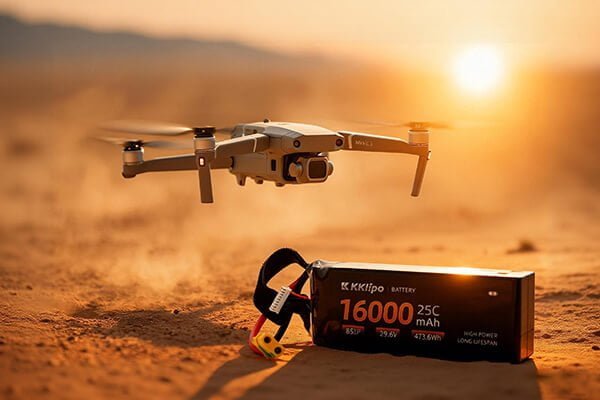
The Physical Challenge: Delamination While I praise solid-state for safety, I must be honest about the engineering challenges we are still solving.
- Thermal Expansion: Everything expands when it gets hot. Inside a solid-state battery, you have a cathode, an anode, and a solid electrolyte. These three materials are different. They expand at different rates.
- The Interface Problem: Imagine gluing a piece of metal to a piece of plastic and heating them up. One expands more than the other, and the glue might break. In a battery, if the layers separate (delamination), the ions cannot jump across. The battery capacity drops permanently.
- Chemical Decomposition: While they don't catch fire, extreme heat (above 100°C for prolonged periods) can still cause the solid materials to degrade chemically. It won't explode, but it might stop holding a charge.
- My Advice to You: Even though these batteries are "safe" in the heat, do not abuse them. Do not leave them baking in direct sunlight on the tarmac if you don't have to. Store them in the shade. The "safety" protects you from accidents, but treating them well protects your investment. A solid-state battery is an expensive asset; treat it like one.
Conclusion
Solid-state batteries are the safest choice for hot climates like the UAE, offering unmatched resistance to fire and swelling, though you must still manage them carefully to prevent long-term wear from thermal expansion.