


You're trying to source batteries for your drone fleet, but the weights on spec sheets are all over the place. Choosing a battery that's too heavy can overload the drone, while one that's too light won't provide the flight time you need.
A drone battery's weight varies dramatically based on its purpose, from under 50 grams for a small hobby drone to over 10 kilograms for a heavy-lift industrial model. The specific weight is directly determined by the battery's energy capacity and the drone's mission requirements.
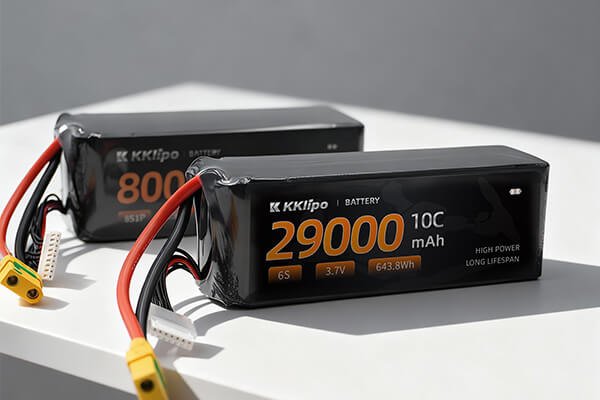
As a manufacturer of high-performance drone power solutions, we handle this question every day. The weight is not just a simple number; it's a critical design parameter that dictates the drone's flight time, agility, and payload capacity. Understanding why these weights differ so much is the first step to making an informed procurement decision that aligns with your operational goals.
Why does battery weight vary so much between different drones?
You see a tiny 50-gram battery and a massive 10-kilogram pack, and it's hard to believe they both power "drones." This huge difference can make it difficult to standardize your procurement process or compare options effectively.
The weight difference comes down to the drone's mission. Consumer drones prioritize portability and use lightweight batteries for shorter flights. Industrial drones, however, require heavy, high-capacity batteries to carry large payloads and fly for extended periods in agriculture, logistics, or surveying.
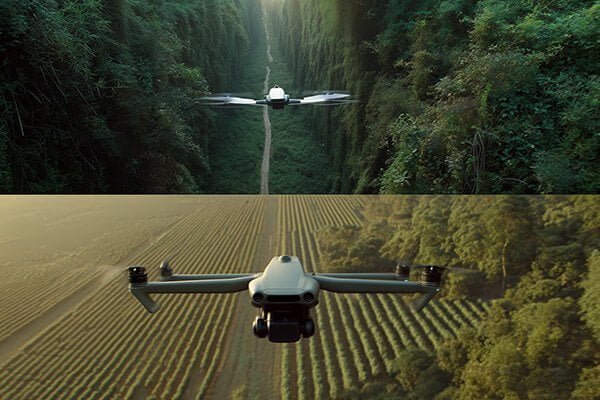
As a professional in this field, Omar, you know that not all drones are created equal. The power system is tailored to the job. A drone designed to be carried in a backpack has fundamentally different energy needs than one designed to spray a field or deliver a package. This is why you see such a vast spectrum of battery weights on the market. It's all about matching the power source to the specific application, a core principle we follow at KKLIPO when developing custom solutions.
A Spectrum of Power and Weight
The drone's application is the primary driver of battery size and weight. A look at the market shows a clear correlation between the drone's job and how heavy its power source is.
| Drone Type | Typical Weight Range | Example Model | Battery Weight | Battery Energy (Wh) |
|---|---|---|---|---|
| Consumer Aerial | ~45g – ~335g | DJI Mavic 3 Pro | 335.5 g | 77 Wh |
| Pro / Enterprise | ~390g – ~1.6kg | DJI Matrice 300 (TB65) | ~1.35 kg | 263.2 Wh |
| Heavy-Lift Industrial | ~2.7kg – ~18kg+ | KKLIPO Custom 12S | ~2.7 kg | ~710 Wh |
As you can see:
- Consumer Drones: These are all about portability. The batteries are designed to be as light as possible, often keeping the total drone weight under regulatory limits while providing enough power for recreational photography.
- Enterprise Drones: This is the middle ground. Drones like the Matrice series need more power to carry advanced sensors like thermal cameras or LiDAR, so their batteries are significantly heavier to support longer flight times with these payloads.
- Heavy-Lift Industrial Drones: This is our specialty. Drones used in agriculture, logistics, or firefighting need maximum power. Their batteries are the heaviest because they must lift heavy payloads (e.g., spray tanks, delivery boxes) and sustain flight for as long as possible. The batteries themselves can weigh many kilograms.
What is the key technical factor that determines a battery's weight?
You're an engineer looking at spec sheets with volts, amps, and capacity. It is not immediately obvious which of these numbers has the biggest impact on physical weight, making direct, like-for-like comparisons a challenge.
The single most important factor determining a battery's weight is its total energy, which is measured in Watt-hours (Wh). You can think of Watt-hours as the size of the drone's fuel tank. A bigger tank holds more energy but will always weigh more.
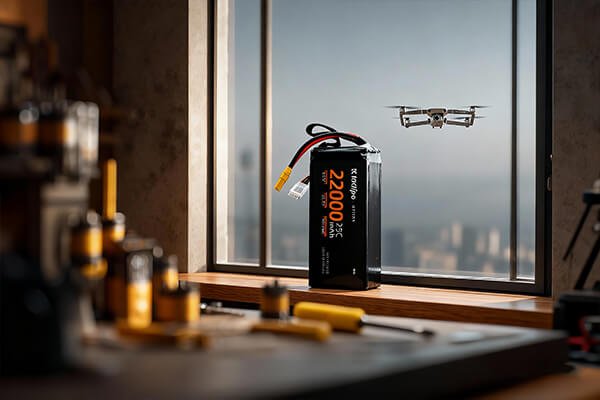
This is where your engineering background gives you an advantage. While marketing may focus on flight time, the Watt-hour rating is the true, standardized measure of a battery's energy content. At KKLIPO, when we design a custom battery solution, the target Watt-hour rating is one of our first and most important considerations because it has a direct and predictable relationship with the final weight of the pack. It cuts through the noise and tells you exactly how much "fuel" you are carrying.
Decoding Watt-hours (Wh): The True Measure of Energy
To understand weight, you must first understand energy. The Watt-hour (Wh) figure on a battery spec sheet is the most honest indicator of its potential.
It is calculated with a simple formula: Watt-hours (Wh) = Nominal Voltage (V) × Capacity (in Amp-hours, Ah)
Think of it like a car's fuel tank. The Voltage (V) is like the pressure of the fuel line, while the Capacity (Ah) is the total volume of fuel available. The combination of the two gives you the total energy (Wh) you have for your journey.
If you look back at the table in the previous section, you can see this direct correlation:
- The DJI Mavic 3 Pro battery (77 Wh) weighs 335.5 grams.
- The DJI Matrice 300 battery (263.2 Wh) has about 3.4 times the energy and weighs 1,350 grams, which is about 4 times heavier.
This relationship is fundamental. As a procurement manager, if you need to double your drone's energy reserve to extend its mission time, you should expect to roughly double the weight of its battery. Our job as your battery partner is to optimize this energy-to-weight ratio, using the most advanced cell technology to pack as much power as possible into every gram.
What if you could break the rigid linear link between battery weight and capacity?
While traditional LiPo chemistry forces a strict penalty—forcing procurement managers to accept double the physical weight for double the energy reserve—next-generation Semi-Solid State Drone Battery Technology is fundamentally altering the future industry trend. By rewriting the physics of UAV power with a significantly higher Wh/kg energy density, these cells allow industrial fleets to bypass the heavy weight penalty. You get the extended mission runtime your advanced sensors require, without pushing your aircraft past its Maximum Takeoff Weight (MTOW) or hitting the wall of diminishing returns.
How do you find the right balance between battery weight and performance?
You want the longest possible flight time, so your first thought is to use the biggest battery available. But you are rightly concerned that the extra weight could make the drone unstable, sluggish, or even exceed its legal takeoff weight.
Finding the right balance means you do not automatically choose the heaviest battery. You must match the battery's energy to the drone's Maximum Takeoff Weight (MTOW) and mission profile. Adding weight for flight time gives diminishing returns and hurts agility.

This is the classic optimization problem that every drone operator and engineer faces. It's a trade-off. More battery weight gives you more energy, but it also means the motors have to work harder just to lift the battery itself. At KKLIPO, we often work with clients to run tests and find the "sweet spot" for their custom platforms, ensuring they get the endurance they need without sacrificing the performance that makes the mission possible.
The Optimization Triangle: Weight, Flight Time, and Agility
Your decision on battery weight is a balancing act between three critical factors.
-
Check Official Specifications First: Before considering any battery, consult the drone's user manual. Find the Maximum Takeoff Weight (MTOW). This is a hard limit that includes the drone, the battery, and any payload. Exceeding this is unsafe, potentially illegal, and will void your warranty. The manual may also specify a maximum battery weight. This is your non-negotiable starting point.
-
Let the Mission Define the Need: The "best" battery depends entirely on the job.
- For a surveying or mapping mission that involves long, straight flight paths, a heavier, higher-capacity battery is often ideal. Agility is less important than endurance.
- For a cinematic filming or close-quarters inspection mission, agility is key. A lighter battery will allow the drone to accelerate, brake, and turn more responsively, resulting in better data or a better shot.
-
Recognize Diminishing Returns: There is a point where adding more battery weight stops being efficient. A portion of the new energy is consumed just to lift the extra weight of the battery itself. For example, doubling your battery weight will not double your flight time. It will increase it, but not proportionally. Finding this point of diminishing returns is key to an efficient setup. This is where working with a specialized battery provider to analyze flight data becomes invaluable.
Conclusion
A drone battery's weight is tied to its energy. Lighter packs are for portable drones, while heavier batteries power industrial workhorses. Balance the weight against your drone's specs and mission needs for optimal performance.