

You're at the store, staring at a wall of AA batteries. The lithium options are expensive, while the alkaline ones are cheap. You need to make a choice but aren't sure if the high price of lithium is a gimmick or a genuine performance advantage.
Neither is strictly "better"; they are designed for different jobs. Lithium batteries offer superior performance, longer life, and extreme temperature resistance for high-drain devices. Alkaline batteries provide excellent value for everyday, low-drain electronics where cost is a primary concern.
This is a decision point we see often, from individual consumers to large-scale industrial procurement. As battery experts at KKLIPO, we know that making the wrong choice means either overspending on performance you don't need or crippling a high-tech device with a battery that can't keep up. For a professional like Omar, understanding this trade-off is essential for optimizing both performance and budget.
When does the higher cost of lithium batteries make sense?
You see the high price tag on lithium batteries and wonder if they are ever worth the investment for your company's devices. You need to justify the extra cost with tangible performance gains, especially for critical or high-performance equipment.
Choose lithium batteries when device performance and long-term reliability are non-negotiable. Their stable voltage output, superior lifespan, and wide operating temperature range make them essential for high-drain electronics, smart devices, and mission-critical equipment.
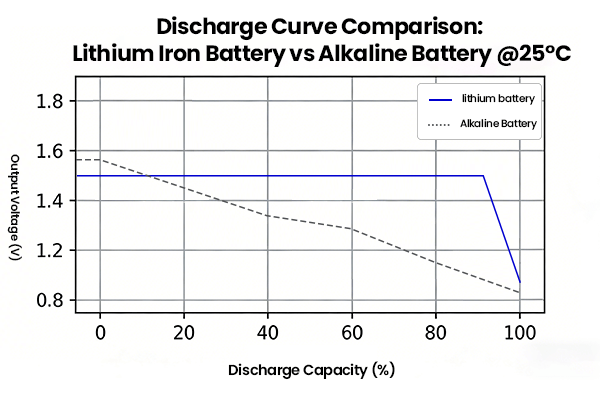
The key advantage of a lithium battery (like the Energizer L91) is its flat voltage curve. It delivers a steady ~1.5V throughout its entire life cycle before suddenly dropping off. An alkaline battery's voltage slowly fades as it's used. This stable power means your devices operate at peak performance from start to finish.
When to Specify Lithium:
- High-Drain Electronics: Digital cameras, external flashes, and high-performance game controllers draw large bursts of power. Lithium's stable voltage ensures they function correctly without lag or failure.
- Smart Home Devices: For a smart lock, a gradual voltage drop from an alkaline battery could lead to a malfunction, locking you out. Lithium's long, stable life ensures consistent, reliable operation.
- Outdoor & Extreme Temperature Gear: Lithium batteries excel in the cold, functioning in temperatures down to -40°C. Alkaline batteries lose significant capacity in freezing conditions, making them unreliable for outdoor sensors or GPS trackers in winter.
- Emergency & Safety Equipment: With a shelf life of 10-15 years, lithium batteries are the only logical choice for smoke alarms, carbon monoxide detectors, and emergency flashlights.
What makes alkaline batteries the everyday workhorse?
You know alkaline batteries are the default choice for most people and applications. You need to be clear on their strengths and weaknesses to know exactly where they fit in a professional procurement strategy without compromising device function.
Alkaline batteries are the go-to choice for low-drain devices where cost is the most important factor. Their low price and wide availability make them the most economical solution for electronics that consume power slowly and consistently over a long period.
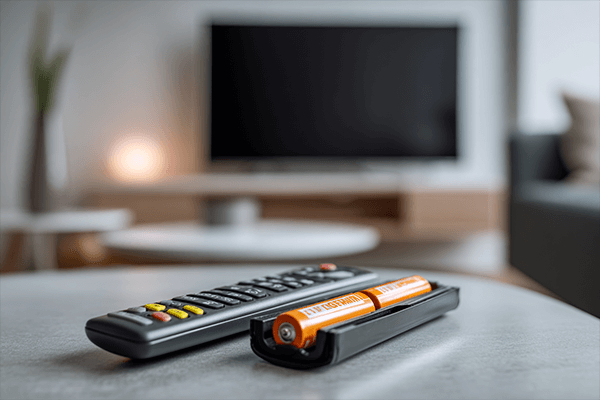
The biggest advantage of alkaline batteries is their unbeatable cost-effectiveness. For a device like a TV remote or a wall clock, the power draw is so minimal that the superior performance of a lithium battery would be entirely wasted. These devices are not sensitive to the slow voltage drop of an alkaline cell, so using a more expensive battery provides no tangible benefit.
When to Specify Alkaline:
- Low-Drain Household Items: TV remotes, wall clocks, wireless mice, and keyboards sip power very slowly. Alkaline batteries provide years of service in these applications for a very low cost.
- Children's Toys: For many simple toys with basic lights or sounds, alkaline batteries provide a sufficient and affordable power source.
- General-Purpose, Non-Critical Use: In any application where peak performance is not a requirement and the environment is temperature-controlled, alkaline batteries offer the best value.
- The Biggest Caveat: Leakage. The primary downside of alkaline batteries is their tendency to leak corrosive potassium hydroxide when fully discharged. It is critical to remove depleted alkaline batteries from devices immediately to prevent permanent damage.
How do performance characteristics compare head-to-head?
You need a clear, data-driven way to compare these two battery chemistries to make informed decisions. A simple spec sheet comparison can cut through marketing claims and highlight the real-world differences that matter for your applications.
Lithium batteries outperform alkaline in nearly every technical metric—energy density, weight, temperature range, and voltage stability. Alkaline's sole advantage is its significantly lower purchase price, making it a purely economic choice.

Understanding these technical differences is key for any procurement professional. Choosing the wrong battery isn't just a minor inconvenience; it can mean failed operations in the field or damaged equipment.
Specification Showdown: Lithium vs. Alkaline
| Feature | Lithium (Primary) | Alkaline | The Procurement Takeaway |
|---|---|---|---|
| Energy Density | Very High | Medium | Lithium offers much longer runtime in the same size cell. |
| Weight | Lighter (by ~30%) | Heavier | Crucial for portable and weight-sensitive devices like handheld sensors. |
| Voltage Curve | Flat & Stable (~1.5V) | Gradually Declines | Lithium ensures peak device performance until the end of its life. |
| Cold Performance | Excellent (down to -40°C) | Poor (Fails near 0°C) | Non-negotiable for any outdoor or cold-chain application. |
| Shelf Life | 10-15+ years | 5-10 years | Lithium is the only choice for long-term emergency storage. |
| Leak Risk | Very Low | High (when depleted) | Alkaline poses a significant risk of damaging expensive equipment if not managed. |
| Price | High | Low | Alkaline wins on upfront cost, but lithium may have a lower total cost of ownership in high-drain devices due to longer life. |
Conclusion
Choose lithium for high-performance, critical, or outdoor devices where reliability is paramount. Choose alkaline for everyday, low-drain electronics where minimizing upfront cost is the primary goal. Matching the battery to the application is key.