

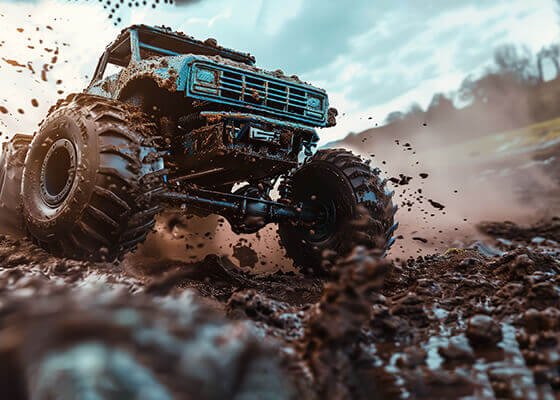
You want to get into RC cars, but the scales—1/10, 1/8, 1/6—are just confusing numbers. This uncertainty makes it impossible to choose the right vehicle, risking a purchase that's too small for your terrain or too large and powerful for your space.
An RC car's scale is a direct ratio of its size to a real vehicle, dictating its dimensions, weight, and power needs. 1/10 is the versatile entry point, 1/8 is the competitive sweet spot, and 1/6 or larger scales offer massive presence and power.
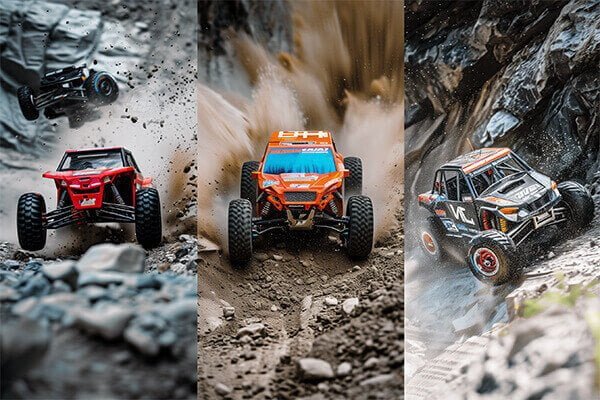
As a manufacturer of high-performance batteries, we see how scale directly impacts power system requirements. The principles that apply to selecting a battery for a 1/8 scale buggy are the same ones used when we design a custom power solution for an agricultural drone. The platform's size and weight determine everything. Understanding these scales is the first step in understanding the engineering and power demands behind these incredible machines. Let's break down what these numbers actually mean for you.
How Do the Most Common Scales Compare?
You're trying to decide on a scale, but the differences in size, cost, and capability are unclear. Without a clear comparison, you risk choosing a scale that doesn't match your budget, available space, or performance expectations.
1/10 scale offers the best balance of affordability and versatility. 1/8 scale provides a significant jump in performance and durability for competitive use. 1/6 and 1/5 scales are giants, focused on maximum power and visual impact.
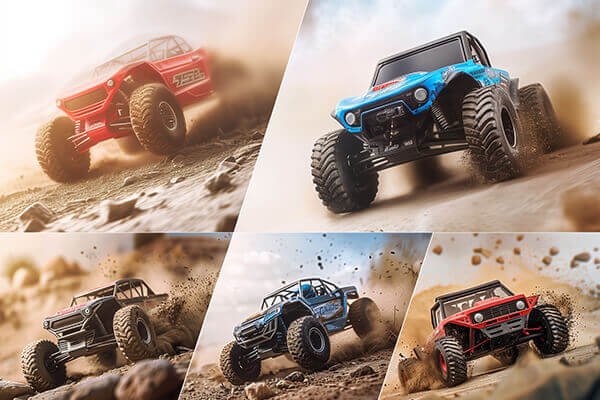
Choosing a scale is about defining your primary goal. Are you looking for a versatile backyard basher, a competitive racer, or an absolute monster truck? Each step up in scale represents a significant change not just in size, but in the entire experience.
| Feature | 1/10 Scale | 1/8 Scale | 1/6 Scale | 1/5 Scale |
|---|---|---|---|---|
| Typical Length | ~45-50 cm | ~50-60 cm | ~70-80 cm | ~80-100+ cm |
| Typical Weight | 2-4 kg | 4-6 kg | 6-10 kg | 10-20+ kg |
| Power System | 2S-3S LiPo | 4S-6S LiPo | 6S-8S+ LiPo | High-Voltage Electric or Gasoline |
| Core Advantage | Most versatile, affordable, huge parts availability. | The "sweet spot" for performance and racing. | Impressive visual scale and presence. | Ultimate power, sound, and realism. |
| Best For | Beginners, budget-conscious users, drifters, light off-road. | Serious racers, aggressive bashers, all-terrain performance. | Scale enthusiasts, sand dunes, major visual impact. | Wide-open spaces, long runtimes (gas), raw power fans. |
As you can see, the jump from 1/10 to 1/8 is significant. It's where the hobby transitions from a general-purpose platform to a specialized, high-performance machine. This is also where power system demands increase exponentially.
Why Is 1/8 Scale Considered the Competitive "Sweet Spot"?
You want a high-performance vehicle but are unsure which scale offers the best competitive value. Investing in the wrong platform could leave you with a car that isn't durable enough for racing or lacks the support of a competitive community.
The 1/8 scale is the standard for competitive off-road racing because it offers the perfect balance of size, weight, and power. Its larger chassis handles rough terrain better than a 1/10, while its powerful 4S-6S LiPo systems provide explosive, controllable speed.
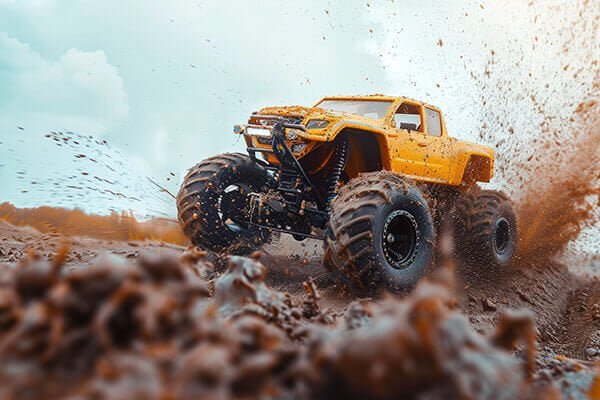
While 1/10 scale is fantastic for versatility, 1/8 scale is where pure performance engineering takes over. The increased mass and longer suspension arms allow it to glide over bumps and ruts that would unsettle a smaller car. This stability is crucial on a demanding racetrack.
Here’s why it dominates the competitive scene:
- Enhanced Stability: The larger footprint and heavier weight make it more planted and predictable at high speeds, especially on uneven surfaces.
- Superior Durability: Components are larger and built to withstand the immense forces generated by powerful brushless motors and aggressive racing. Drive shafts, gears, and shock towers are all significantly more robust than their 1/10 scale counterparts.
- Massive Power Handling: The 1/8 scale platform is designed from the ground up to handle the extreme current draw from 4S (14.8V) and 6S (22.2V) LiPo batteries. This high voltage translates directly into incredible acceleration and top speed.
This is where our expertise at KKLIPO comes in. A 1/8 scale race car can pull over 150 amps in an instant. It needs a battery with a very high C-rating to deliver that power without failing.
How Does Scale Impact the Battery Choice for Drones?
You might think the battery needs for a toy car are irrelevant to industrial drones. This misconception could lead you to underestimate the critical, universal principles of power systems when sourcing components for your high-value UAV fleet.
The process is identical. A larger, heavier RC car requires a higher voltage and capacity battery, just as a heavy-lift drone requires a more powerful battery pack than a small inspection quad. Scale dictates weight, and weight dictates the required power solution.
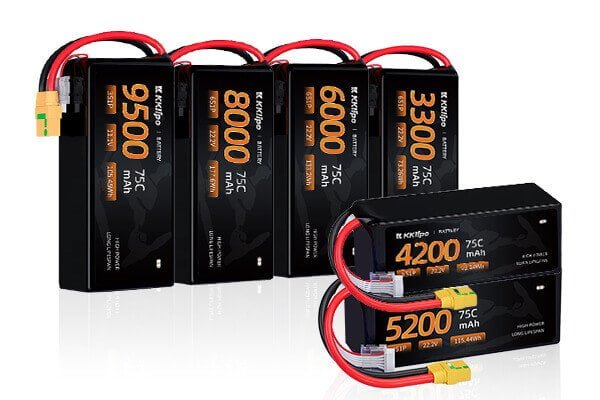
As a procurement manager, you are constantly solving this exact problem. Whether for a car or a drone, the fundamental questions are the same:
- What is the All-Up-Weight (AUW)? A 15kg 1/5 scale truck needs a massive power system. A 15kg agricultural drone carrying a payload of chemicals needs an equally robust and reliable high-voltage battery system.
- What is the Performance Envelope? An RC race car needs a high-discharge battery for short bursts of extreme power. A mapping drone needs a high-capacity battery optimized for long, steady flights to maximize endurance.
- What are the Physical Constraints? The battery bay in a 1/8 scale buggy is a fixed size. The available mounting space on a custom drone frame is also a fixed constraint. The battery must physically fit while meeting the power demands.
At KKLIPO, we specialize in solving this equation. We deliver custom battery solutions that provide the optimal power-to-weight ratio, ensuring your platform—whatever its scale or application—performs exactly as designed.
Conclusion
RC scales directly determine a vehicle's size, performance, and power needs. 1/10 is for versatility, 1/8 is for competition, and larger scales are for maximum impact. Understanding this helps you choose the right platform and its essential power system.