

You're a procurement manager seeing "21700" everywhere, from EV specs to high-end power tools. You know it's important, but the jumble of numbers and acronyms makes it hard to grasp its true value and how it impacts your buying decisions.
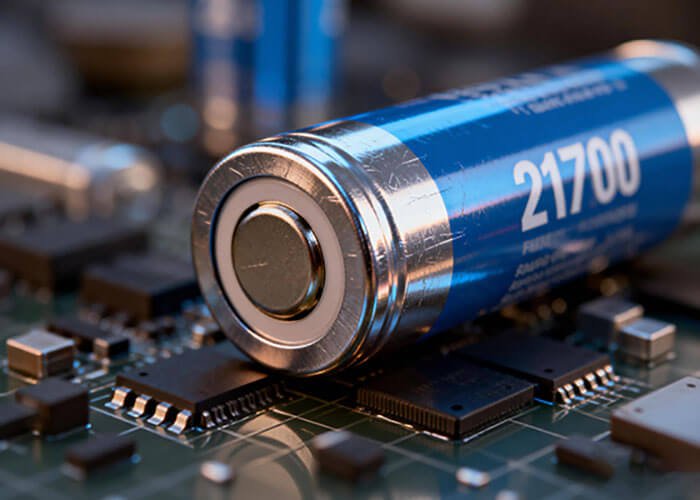
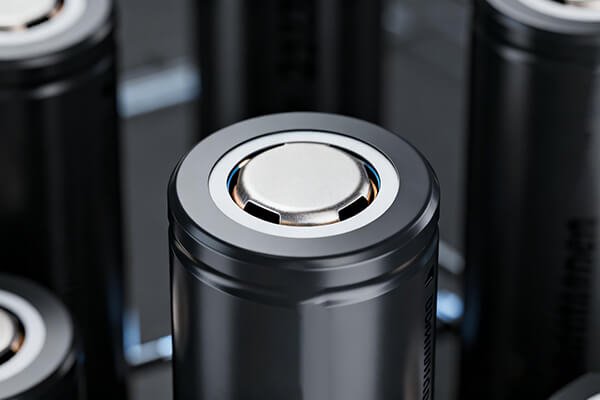
The 21700 is a specific size of cylindrical lithium-ion battery, named for its dimensions: 21mm in diameter and 70mm in length. It's a significant upgrade over the older 18650 standard, offering more energy, power, and efficiency in a slightly larger package.
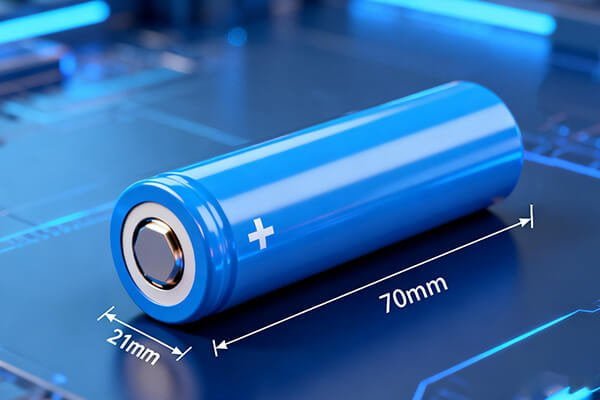
As a specialist in high-performance drone batteries, I explain this to clients all the time. Think of the name "21700" as a simple blueprint. The "21" is its diameter in millimeters, the "70" is its length, and the final "0" denotes its cylindrical shape. This simple naming convention is the key to understanding the entire ecosystem of cylindrical cells. The 21700 has become the new benchmark because it hits a sweet spot: it’s large enough to pack in significantly more energy than a 18650, but still small enough to be versatile for many applications. Let's decode the specs that truly matter to you.
What Do the Key Specifications Actually Mean for Performance?
You're looking at a spec sheet filled with terms like "mAh," "C-rate," and "NCM." You need to know how these technical details translate into real-world advantages like longer flight times or more powerful tool operation.
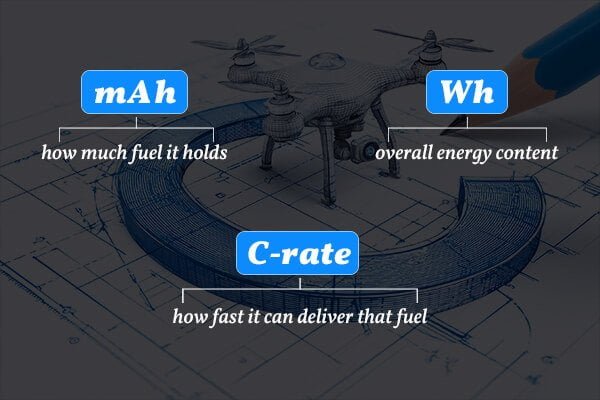
Key specs define the battery's three core functions: how much fuel it holds (capacity in mAh), how fast it can deliver that fuel (discharge rate), and its overall energy content (Watt-hours). These determine a device's runtime and power.
When I evaluate cells for a custom drone battery pack, I focus on a few critical numbers. Forget the complex chemistry for a moment and think of it like this:
The Three Most Important Specs
- Capacity (mAh): This is the "size of the fuel tank." A 5000mAh cell holds more energy than a 4000mAh cell, meaning it will run longer under the same load. The 21700 standard allows for capacities between 3000mAh and 6000mAh.
- Discharge Current (A or C-rate): This is "how fast the fuel can flow." A high-discharge cell (e.g., 30A) can power a high-demand motor for a drone or power tool without overheating. A low-discharge cell (e.g., 5A) is better for low-power devices like flashlights. Mismatching this is dangerous.
- Nominal Voltage (V): This is the cell's average operating voltage, typically 3.6V or 3.7V for most 21700s. This is crucial for ensuring compatibility with the device's electronics.
For example, a high-capacity Samsung 50S cell is great for long-endurance drones, while a high-power Molicel P42A is perfect for high-G racing drones that need intense bursts of power. Choosing the right one is about matching the cell's specialty to the mission.
Why Is the 21700 Considered an "Upgrade" to the 18650?
You see the 21700 praised as a successor to the 18650. But since it's a different size, you need to understand where the real advantage lies and why the industry is shifting towards this new standard.
The 21700 is an upgrade because it offers significantly more energy in a slightly larger volume. This improved energy density means you can build a battery pack that is lighter, smaller, and often cheaper than an 18650 pack of the same total energy.
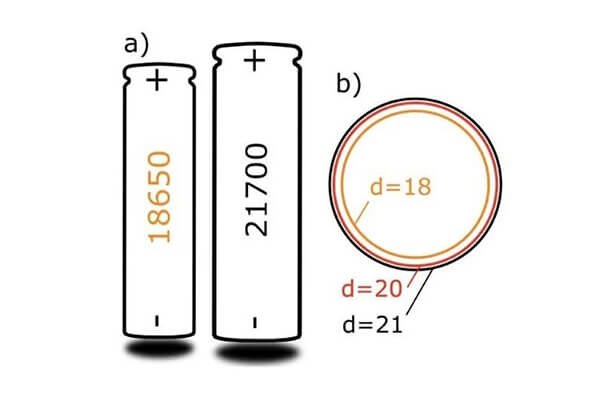
The magic of the 21700 is in its efficiency at the system level. While a single 21700 cell is heavier than a single 18650, its capacity is much higher.
Here’s a practical comparison:
| Feature | 18650 Battery | 21700 Battery | The "So What" Factor |
|---|---|---|---|
| Volume | ~16.5 cm³ | ~24.2 cm³ | A ~47% increase in size... |
| Typical Capacity | 2500–3500mAh | 4000–5500mAh | ...yields up to 50% more capacity. |
| System Design | More cells needed | Fewer cells needed | Fewer cells mean less weight, fewer failure points, and a simpler BMS. |
This is why Tesla switched to 21700 cells for the Model 3. They could build a more powerful battery pack with fewer cells, simplifying manufacturing and reducing cost. For your drones, this means a lighter pack for longer flights or a more powerful pack for heavier payloads. It’s a strategic engineering choice, not just a component swap.
How Do I Choose the Right 21700 Battery for My Application?
You're convinced of the 21700's benefits and are ready to source them. Now you face a market full of different brands and models, and you need a clear strategy to select the right one and avoid costly mistakes.
First, confirm physical compatibility. Then, prioritize the continuous discharge rating (Amps) to match your device's power needs. Finally, choose a reputable brand to ensure safety, reliability, and accurately stated specifications.
Making the right choice comes down to a simple, three-step process that I use for all our B2B clients at KKLIPO.
Your 3-Step Sourcing Guide:
- Check the Fit: This is non-negotiable. Does your device's battery bay support a 21mm diameter and 70mm length? If not, the conversation ends.
- Match the Power, Not Just the Capacity: Don't just look for the highest mAh. Check the device's power draw. A high-power drone motor needs a cell with a high continuous discharge rating (CDR) of 30A or more. Using a low-discharge, high-capacity cell in a high-power device is a fire hazard.
- Insist on Quality Brands: The battery market is full of fakes with inflated specs. Stick to Tier-1 manufacturers like Samsung, LG, Panasonic/Sanyo, Molicel, or trusted industrial suppliers. A cheap, unreliable cell is a massive liability for high-value assets like industrial drones.
By following this process, you move from being a component buyer to a strategic sourcer, ensuring every battery you procure delivers maximum performance and safety.
Conclusion
The 21700 battery offers a superior balance of energy, power, and cost. Understanding its key specifications is crucial for selecting the right cell to maximize your equipment's performance and reliability.