

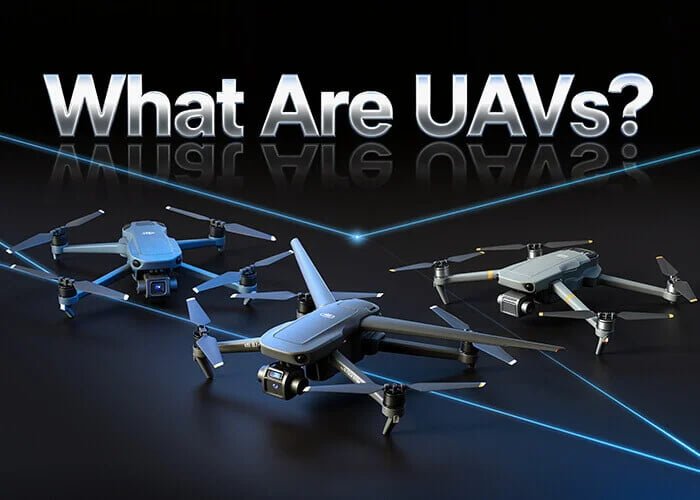
The term UAV is used to describe everything from a small toy to a sophisticated military aircraft. This ambiguity makes sourcing the right components, like batteries, a major challenge for your projects.
UAV stands for Unmanned Aerial Vehicle. It refers to any aircraft that operates without a human pilot on board. UAVs are controlled remotely by an operator or fly autonomously along a pre-programmed route to perform specific tasks.
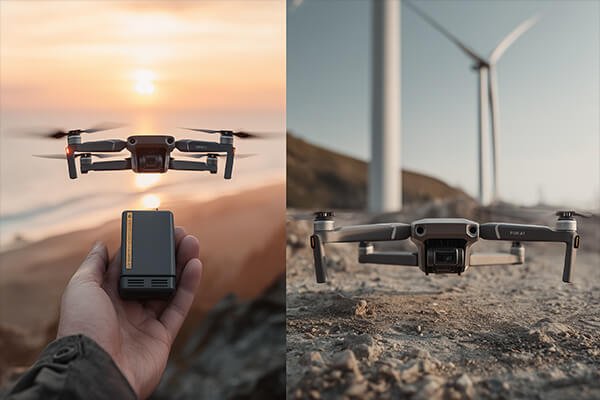
While this definition is simple, the world of UAVs is incredibly diverse. As a procurement manager, you're not just buying for a "UAV"; you are sourcing for a specific type of machine designed for a specific mission. Understanding these differences is the first step in ensuring you invest in a power solution that delivers performance and reliability, not one that grounds your entire fleet. Let's explore what this means in practice.
What Are the Main Types of UAVs?
You know that not all UAVs are the same. Choosing a battery without understanding the aircraft's fundamental design is a recipe for failure, leading to poor performance and wasted budget.
The main types of UAVs are multirotor, fixed-wing, and VTOL hybrids. Multirotors are best for hovering and maneuverability, fixed-wings excel at long-endurance flights, and VTOLs combine the benefits of both, each requiring a very different battery design.
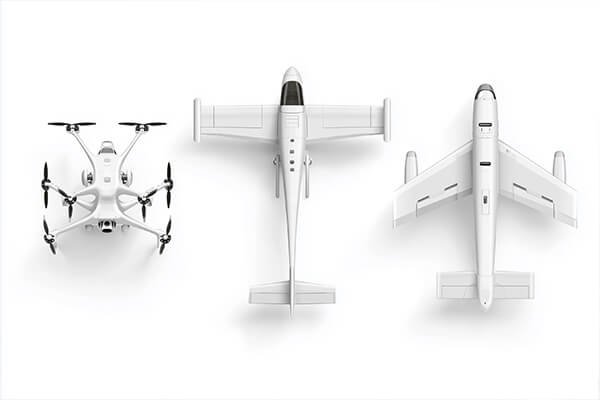
The physical design of a UAV dictates how it uses energy. A battery that works perfectly in one type of airframe will fail completely in another. As a battery manufacturer, our first question is always about the type of UAV because it tells us everything about the power demands.
How Flight Mechanics Determine Battery Needs
The way a UAV stays in the air is the single most important factor for battery selection. Each design creates a unique load profile.
- Multirotor UAVs: These are the most common type, with four, six, or eight propellers. They use immense amounts of power to generate vertical lift, especially during takeoff and while carrying a heavy payload. Their batteries must be ableto deliver huge bursts of current, which we measure as a high "C-rating."
- Fixed-Wing UAVs: These look and fly like traditional airplanes. They are far more efficient in forward flight. Once they are airborne, they require much less power to stay aloft. For these systems, the most important battery metric is energy density (Wh/kg)—getting the most energy in the lightest possible package to maximize flight time.
- VTOL (Vertical Take-Off and Landing) UAVs: These are advanced hybrid designs. They use propellers like a multirotor to take off and land vertically but transition to flying like a fixed-wing for the main part of their mission. Their batteries need to be a complex balance of both high C-rating for the vertical phase and high energy density for the cruise phase.
| UAV Type | Primary Strength | Key Battery Requirement | Best Use Case |
|---|---|---|---|
| Multirotor | Hovering & Agility | High Discharge Rate (C-Rating) | Aerial Photography, Inspection |
| Fixed-Wing | Endurance & Range | High Energy Density (Wh/kg) | Long-Range Mapping, Surveillance |
| VTOL Hybrid | Versatility | Balanced C-Rating & Energy Density | Delivery, Advanced Surveying |
How Are UAVs Used Commercially?
The number of industries using UAVs is growing fast. It's hard to keep track of every application and what it means for your procurement strategy for different clients or projects.
Commercially, UAVs are primarily used for data collection, inspection, and transportation. Key sectors include agriculture (crop monitoring), energy (pipeline inspection), construction (site surveying), and logistics (package delivery), each with a unique operational profile.
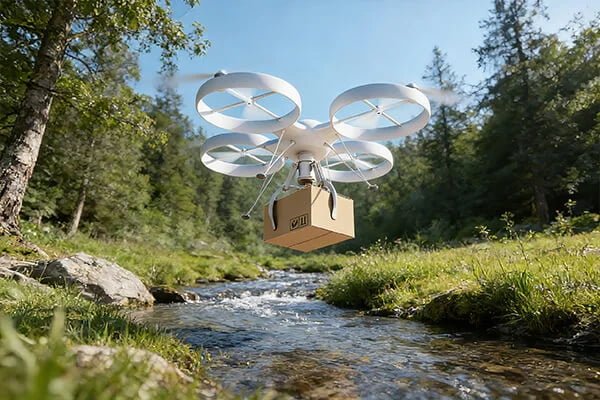
Understanding the mission profile is critical for sourcing the right battery. A UAV spraying crops has a very different daily routine than one inspecting 100 kilometers of pipeline. This "day in the life" of the UAV dictates the battery specifications.
Matching the Battery to the Mission
The mission tells you how the battery will be used—and abused. We design battery solutions based on these operational realities.
- Agriculture: Missions are often short, repetitive flights carrying heavy payloads of liquid. The UAV needs a battery that can handle high current draw and be fast-charged between flights to minimize downtime during the planting or spraying season. Durability and cycle life are key.
- Energy & Utilities Inspection: These missions involve long, linear flights covering vast distances. The primary need is for endurance. The battery must have the highest possible energy density (Wh/kg) to keep the UAV in the air for as long as possible to cover more ground on a single flight.
- Surveying & Mapping: This requires stable, methodical flights to capture high-quality data. The battery must provide consistent power output throughout the discharge cycle to ensure the flight controller and high-resolution sensors operate without interruption or voltage sag.
Is a UAV the Same as a Drone or UAS?
The terms UAV, drone, and UAS are often used interchangeably. This can create confusion in technical specifications and lead to miscommunication with suppliers about your system's actual needs.
A UAV is the aircraft. "Drone" is the popular term for it. A UAS, or Unmanned Aerial System, is the entire package: the UAV, the ground controller, and the communications link. As a procurement manager, you are sourcing for the entire UAS.
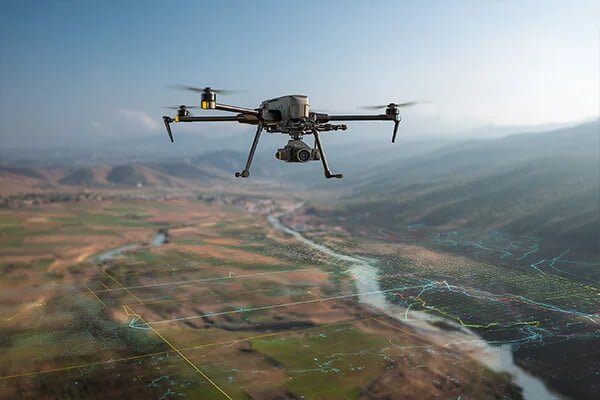
This distinction is more than just semantics; it's a fundamental concept for anyone responsible for the reliability of the entire operation. A failure in any part of the system means the mission fails.
Why You Must Think in "Systems"
When you source a battery, you are not just powering the UAV's motors. You are powering the entire system.
- The UAV (The Vehicle): This is the most obvious power consumer, with its motors, flight controller, and payload (like a power-hungry LiDAR sensor).
- The Ground Control Station (GCS): The operator's controller, display screen, and communication hardware also need reliable, long-lasting power, often from its own dedicated batteries.
- The Data Link: The radios on both the UAV and the GCS that transmit commands and receive data are critical. A drop in power to the radio on the UAV can cause a complete loss of control.
Therefore, when we at KKLIPO develop a battery solution, we analyze the power requirements of the entire UAS. We ensure the battery's voltage remains stable under heavy load to keep all onboard electronics, not just the motors, functioning perfectly. You must ensure all parts of the system are powered for success.
Conclusion
A UAV is an Unmanned Aerial Vehicle. But to make smart procurement choices, you must understand the specific type, mission, and the complete system (UAS) it operates within.