

You hear acronyms like UAV thrown around in meetings and technical documents. It can be confusing, and you need to be sure you are speaking the same language as your suppliers.
UAV stands for Unmanned Aerial Vehicle1. It is the official, technical term for an aircraft that flies without a human pilot on board. It operates using remote control from a ground station or flies autonomously based on a pre-programmed flight plan.
This term is the foundation of our entire industry. But as with many technical terms, its simple definition hides a lot of important details. As someone responsible for sourcing critical components like batteries, knowing the nuances between terms like UAV, drone, and UAS2 can make a big difference in your procurement process. It helps ensure you are asking the right questions and getting the exact solution you need for your specific system.
Is a UAV the Same Thing as a Drone?
You probably use the words "UAV" and "drone" to mean the same thing. You might worry that using the wrong term in front of an engineer or supplier could sound unprofessional.
Yes, for most purposes, a UAV and a drone are the same thing. "UAV" is the formal, technical term preferred by aviation authorities and engineers. "Drone" is the common, popular term used by the public and media. You can use either in conversation.

The distinction between these two terms is mostly about context. As a manufacturer, we use both terms depending on who we are talking to. Understanding when to use each can be helpful.
The Origin of the Terms
The word "drone" actually has military origins. It was first used to describe target aircraft that flew in a simple, pre-set path for anti-aircraft gunnery practice. They "droned" on, which is how they got the name. The term "UAV," or Unmanned Aerial Vehicle, is a more modern and descriptive term. It accurately describes exactly what the machine is: a vehicle that is aerial and unmanned. This is why you will see "UAV" used in all official regulations, technical specifications, and research papers.
When to Use Each Term
| Context | Preferred Term | Why? |
|---|---|---|
| Aviation Regulation (FAA, EASA) | UAV | It is the official, legally defined term. |
| Engineering & Manufacturing | UAV | It is precise and avoids ambiguity. |
| News Media & Public | Drone | It is simple, well-known, and easy to understand. |
| General Conversation | Either | Both are widely understood in the industry. |
So, while you can use them interchangeably, using "UAV" shows a deeper technical understanding, especially when discussing system specifications with suppliers like us.
What Is a UAS, and Is That Different?
Just when you get comfortable with UAV, you see another acronym: UAS. This creates more confusion and makes it harder to be sure you are discussing the right components for your project.
Yes, a UAS is very different and is a crucial concept for procurement. UAS stands for Unmanned Aerial System. It includes the UAV (the aircraft) plus the ground control station, data link, and every other piece of equipment needed to operate.
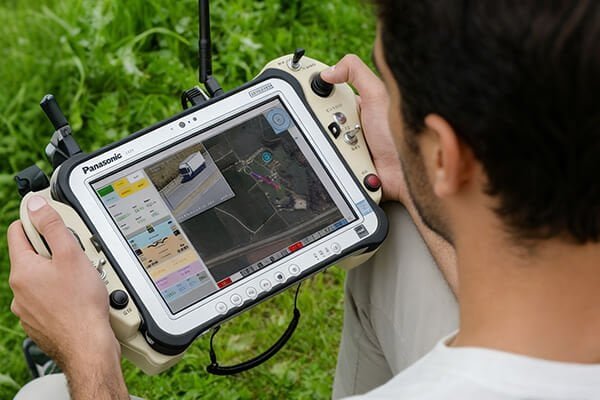
Thinking in terms of the "system" (UAS) instead of just the "vehicle" (UAV) is critical. As a procurement manager, you are not just buying a battery for an aircraft; you are sourcing a power solution for a complete operational system. A failure in any part of that system can ground your entire operation. The battery must reliably power every component.
The Key Parts of a UAS
- The Unmanned Aerial Vehicle (UAV): This is the aircraft itself. It includes the airframe, motors, propellers, flight controller, and the payload (camera, sensors, etc.). Its power needs are often the most demanding.
- The Ground Control Station3 (GCS): This is the command center. It can be a simple handheld remote or a complex station in a vehicle or building. The pilot uses it to control the UAV and monitor its status. This component also requires a reliable power source.
- The Data Link: This is the invisible communication link that connects the UAV and the GCS. It transmits control commands to the UAV and sends back real-time video and telemetry data. The radios and communication hardware on both the UAV and GCS require constant, stable power to maintain this critical link.
When you source a battery from us, we consider the power needs of the entire UAS, ensuring the battery can handle not just the motors, but also the high-power data transmitters and onboard computers.
How Do Different UAV Types Affect Battery Choice?
You understand the terminology now. But you know that a small photography drone is completely different from a large agricultural UAV, and this must impact your battery sourcing decisions.
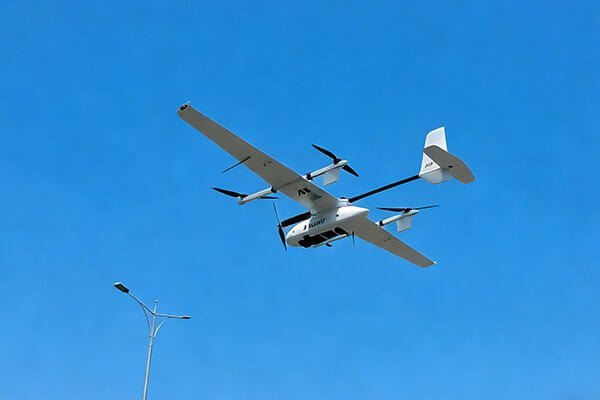
The type of UAV completely changes the battery requirements. Fixed-wing UAVs need steady, long-duration power for endurance. Multirotor UAVs demand high discharge rates for vertical lift. Your battery choice must match the aircraft's specific flight principles.
As a battery solutions provider, this is where we focus our expertise. There is no "one-size-fits-all" battery. Sourcing the wrong type of battery for a specific UAV design will lead to poor performance, short flight times, and even safety risks. The battery must be engineered for the mission profile of the aircraft.
Matching the Battery to the UAV Type
| UAV Type | Flight Principle | Primary Mission | Key Battery Requirement |
|---|---|---|---|
| Multirotor (Quad, Hexa) | Vertical lift via propellers | Photography, inspection, delivery | High C-Rating: Must deliver huge bursts of power for takeoff, hovering, and maneuvering. |
| Fixed-Wing | Forward flight using wings for lift | Long-range mapping, surveillance | High Energy Density (Wh/kg): Must be very lightweight to maximize flight endurance. |
| VTOL (Hybrid) | Combines multirotor and fixed-wing | Versatile missions requiring vertical takeoff and long endurance | Hybrid Performance: Needs both high C-rating for takeoff/landing and high energy density for forward flight. |
For a procurement manager, this means you need to look beyond simple voltage and capacity. For a multirotor, you must ask about the continuous and peak discharge rates (C-rating). For a fixed-wing, the key metric is the energy density (Wh/kg). For a complex VTOL system, you need a custom-engineered solution that can handle both demands without compromise. This is the level of detail we work at to ensure your systems perform as designed.
Conclusion
UAV stands for Unmanned Aerial Vehicle. But understanding the whole system (UAS) and the specific UAV type is essential for making the right battery procurement decisions for your mission.
Explore this link to gain a comprehensive understanding of UAVs and their applications in various industries. ↩
Learn about UAS and its components to better understand the complete system behind UAV operations. ↩
Discover the role of the Ground Control Station in UAV systems and its importance for effective operation. ↩