

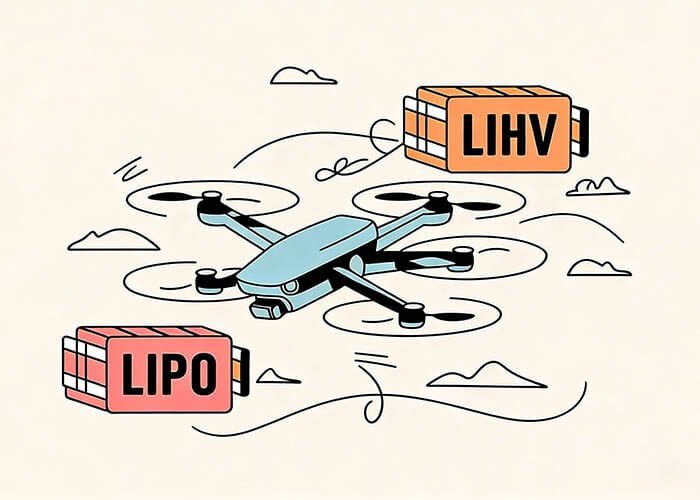
You are always searching for an edge to get longer flight times. But bigger batteries mean more weight, creating a frustrating cycle where you never seem to gain ground.
A LIHV (High Voltage Lithium Polymer) battery is a specialized Li-ion battery that charges to a higher voltage (e.g., 4.35V per cell instead of 4.2V). This small increase allows it to store significantly more energy in the same size and weight package.
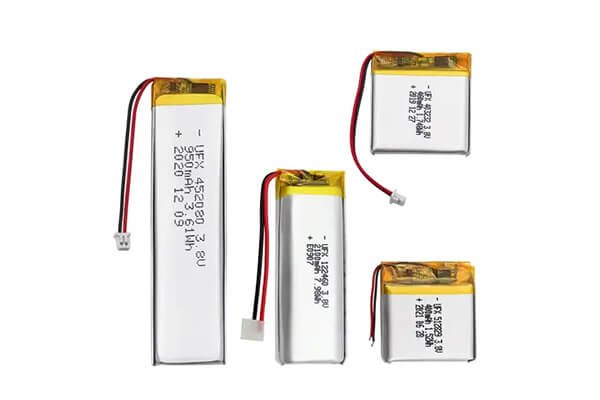
As a battery manufacturer, we constantly work on pushing the limits of energy storage. The development of LIHV technology was a major breakthrough. It offers a direct path to better performance without having to redesign an entire drone to fit a larger, heavier battery. Think of it as a high-performance version of a standard battery. But that extra performance comes with a few things you absolutely need to know, especially when it comes to charging.
How Does a Higher Voltage Give You More Power?
It seems like a small change, just a fraction of a volt. It's hard to see how this could lead to a big difference in flight time for your drone.
The higher charge voltage packs more energy into the same physical space, boosting the battery's energy density. This means for the same weight, a LIHV battery delivers more power and longer endurance.
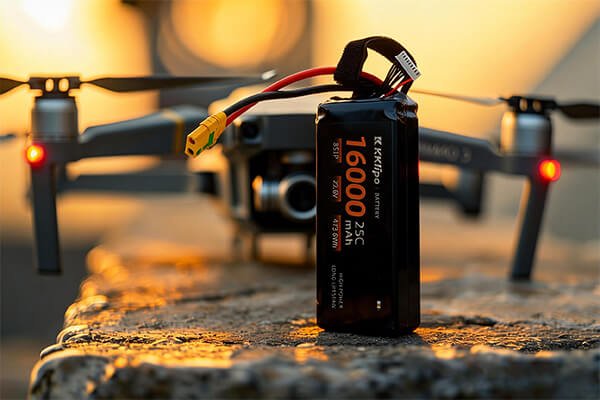
The core principle is simple. A battery's total energy (measured in Watt-hours) is a product of its capacity and voltage. By safely increasing the voltage, you increase the total energy stored. This isn't just "overcharging" a standard battery; LIHV batteries are built with different materials, often including additives like silicon or graphene in the anode, that are specifically designed to handle this higher voltage state safely and stably. The result is a battery that is physically identical to its standard counterpart but holds more fuel.
Here’s a quick comparison of the key voltage parameters:
| Feature | Standard Li-Ion/LiPo | LIHV Battery | Impact |
|---|---|---|---|
| Nominal Voltage | ~3.7V per cell | ~3.8V or 3.85V per cell | Higher sustained power output. |
| Charge Cut-off Voltage | 4.2V per cell | 4.35V or 4.4V per cell | The source of the extra energy. |
This higher voltage platform means your drone's motors get more consistent power throughout the discharge cycle, leading to better throttle response and performance, especially under heavy load.
Are There Any Downsides to Using LIHV Batteries?
More power and longer flight times sound great. But you know there is always a trade-off. You are right to question the impact on lifespan, safety, and your budget.
The primary considerations for LIHV batteries are the absolute requirement for a compatible charger and a potentially higher initial cost. When used correctly, their lifespan is comparable to high-quality standard batteries.
Let's be very clear about the trade-offs, because this is where a procurement manager needs to pay close attention. First, lifespan. While operating at a higher voltage state can theoretically increase stress on a battery, modern LIHV batteries are engineered for it. A quality LIHV pack, used properly, will deliver a cycle life comparable to a standard industrial battery. We've seen well-maintained packs easily surpass 300 cycles while retaining over 80% of their capacity.
The most critical point is charging. You must use a charger that has a dedicated LIHV mode. Using a standard 4.2V charger on a LIHV battery will not damage it, but it will never fully charge, and you will get no performance benefit. The real danger comes from someone trying to charge a standard battery with a LIHV charger, which is extremely unsafe.
Finally, there is cost. The advanced materials and engineering do make LIHV batteries more expensive upfront. However, for applications where performance is critical, the increased flight time and power often provide a return on investment that justifies the initial cost.
Which Applications Benefit Most From LIHV Technology?
You need to know if this technology is just for hobbyists or if it has a real place in your professional fleet. The answer depends entirely on your mission requirements.
LIHV batteries are ideal for applications where weight and flight time are the absolute top priorities. This includes FPV racing, long-range industrial inspection, heavy-lift logistics, and advanced aerial surveying drones.
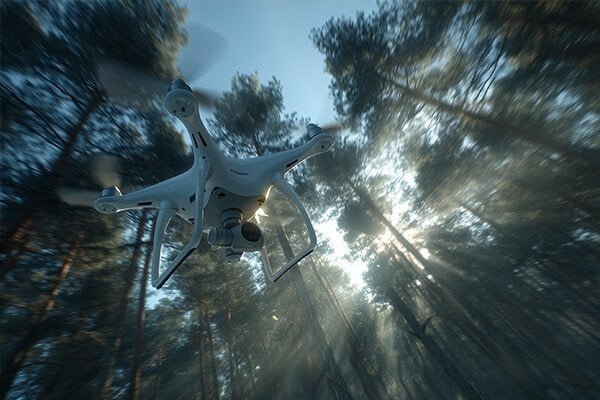
The benefits of LIHV technology are most obvious in scenarios that push the limits of the aircraft. For FPV racing pilots, the higher voltage provides an instant power boost and better throttle response, which is crucial for competitive performance. For industrial applications, the advantage is endurance. An inspection drone that can stay in the air for an extra 15 minutes can cover more ground, complete the mission in a single flight, and increase operational efficiency.
We see LIHV as a key enabling technology. It's so important that we even integrated it into our most advanced solid-state batteries. Our 480 Wh/kg solid-state pack is also a LIHV battery. This combination delivers the highest possible energy density and the highest performance, giving our partners access to flight times and capabilities that are simply not possible with any other technology on the market today. It's the perfect solution for missions where every gram and every minute counts.
Conclusion
LIHV batteries are a high-performance evolution of standard Li-ion technology. By increasing the voltage, they offer more flight time and power, but they require the correct charging equipment to be used safely.