

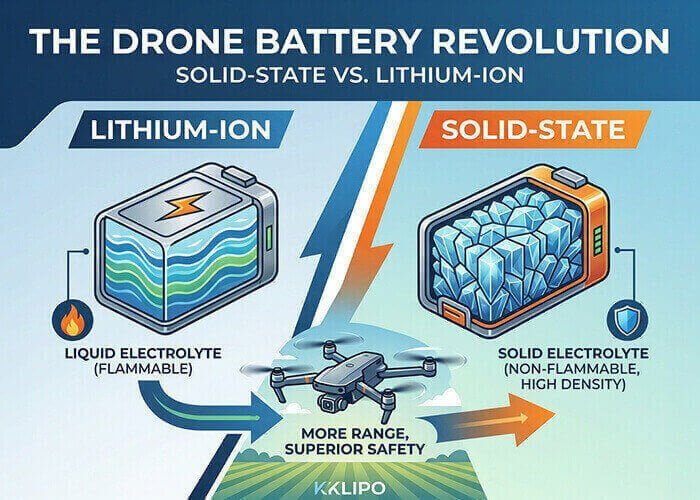
Your drone fleet relies on standard batteries. This limits your flight time and creates safety risks, holding back your potential and increasing your operational costs.
A solid-state battery uses a solid material for its electrolyte instead of the flammable liquid in traditional lithium-ion batteries. This makes it fundamentally safer, allows for much higher energy density, and ultimately enables longer, more reliable flight times for professional drones.
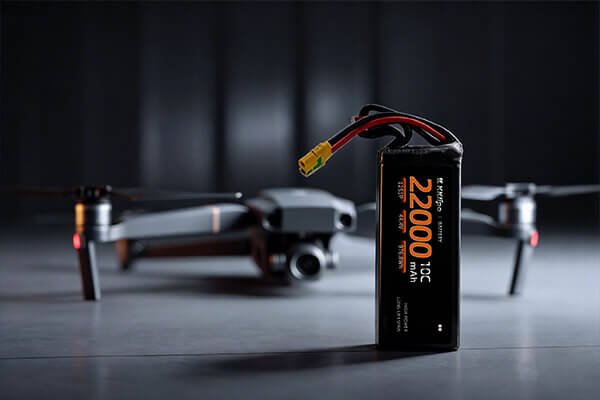
I am constantly asked about this by procurement managers. They see the impressive specifications, but they want to know what it really means for their balance sheet and operational safety. The difference is not just academic; it is a fundamental change in what a drone can do. To understand the value, you have to look past the name and see how the core technology works. This is not just a simple component upgrade. It is a strategic decision that can redefine the capabilities of your entire fleet.
Is a Solid-State Battery Really That Much Safer?
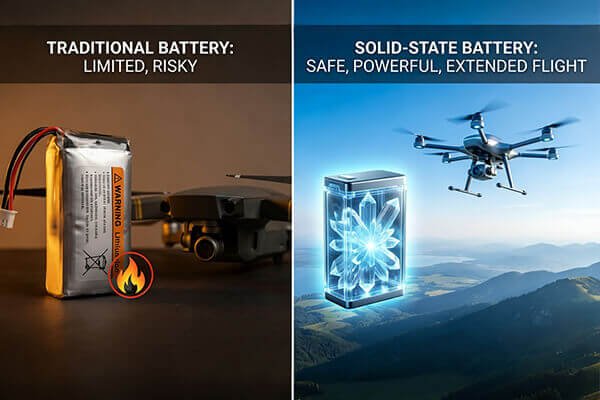
Your drone suffers a hard landing or a crash. The impact damages the battery, creating an immediate and catastrophic fire risk that can destroy the entire system.
Yes. By replacing the flammable liquid electrolyte with a stable, solid material, solid-state batteries eliminate the primary cause of battery fires. They do not leak or ignite upon puncture or impact, making them inherently safer for high-value assets.
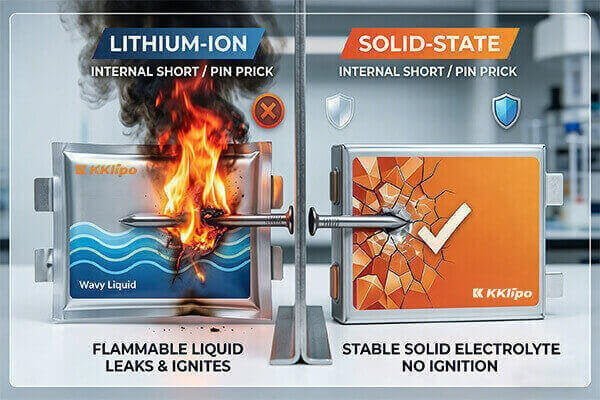
The biggest danger in a standard lithium-ion battery is the liquid inside. This liquid electrolyte is flammable. When a battery is punctured or short-circuits, this liquid can ignite, leading to a dangerous and unstoppable fire known as thermal runaway. As a solutions provider, we know this is the number one safety concern for drone operators. A solid-state battery solves this problem at the most basic level. It contains no liquid fuel. The electrolyte is a solid block of material. If you puncture it, nothing leaks out. If it short-circuits, it does not have the flammable components to create a fire. This is a revolutionary step forward for safety, especially for drones operating over sensitive infrastructure or in populated areas.
| Safety Aspect | Standard Lithium-Ion | Solid-State |
|---|---|---|
| Puncture/Impact | High risk of fire and explosion | No fire, no explosion |
| Internal Short | Can lead to thermal runaway | Heat is contained, no fire |
| Electrolyte | Flammable liquid, can leak | Non-flammable solid, no leakage |
How Does Higher Energy Density Translate to Longer Flight Times?
You need to survey a large area, but your battery life forces multiple landings. Each swap costs time and money, especially in remote or difficult-to-access locations.
Energy density is the amount of energy stored per kilogram. A solid-state battery with 500 Wh/kg holds nearly double the energy of a standard 270 Wh/kg battery of the same weight. This directly translates to longer flight times.
Think of energy density as the fuel efficiency of your battery. A higher number means you get more power for the same amount of weight. For a drone, weight is everything. Every gram you save on the battery is a gram you can use for sensors or an extra minute you can stay in the air. Traditional lithium-ion technology is reaching its physical limit at around 270-300 Wh/kg. Solid-state technology shatters this barrier, reaching 500 Wh/kg or more. For a procurement manager, this number is critical. It means a drone that used to fly for 30 minutes can now potentially fly for 50 minutes or longer, with the exact same payload and airframe. This reduces the number of battery swaps, lowers labor costs, and allows you to complete more missions in a single day.
| Battery Metric | Standard Lithium-Ion | Solid-State |
|---|---|---|
| Energy Density | ~270 Wh/kg | Up to 500 Wh/kg |
| Flight Time (Example) | 30 minutes | ~50-60 minutes |
| Mission Impact | Multiple battery swaps | Single-flight missions |
If Solid-State Is Better, Why Isn't It in Every Drone Yet?
You see the clear benefits of solid-state technology. But when you look for suppliers, the options are limited, and the cost is significantly higher than what you pay now.
The primary barriers are manufacturing complexity and cost. The processes for producing solid-state batteries are new and not yet at the massive scale of lithium-ion. This makes them more expensive and better suited for high-value applications where performance justifies the investment.

As a procurement manager, you must balance performance with cost. Lithium-ion technology has been around for decades. The supply chain is mature, and manufacturing is incredibly efficient, which keeps costs low. Solid-state is a newer, more advanced technology. The manufacturing process is more complex and has not yet reached the same scale. This means the upfront cost per battery is higher. For a consumer drone, this cost is hard to justify. But for an industrial drone conducting critical infrastructure inspections or high-value cargo delivery, the calculation changes. The higher initial investment is offset by a lower total cost of ownership. This comes from a longer battery lifespan, reduced risk of asset loss from fires, and increased operational efficiency from longer flight times. It is a strategic investment, not just a purchase.
| Factor | Standard Lithium-Ion | Solid-State |
|---|---|---|
| Technology Maturity | Very High | Emerging |
| Manufacturing Scale | Massive | Low, but growing |
| Upfront Cost | Low | High |
| Best Application | General consumer/prosumer use | High-value industrial missions |
Conclusion
Solid-state batteries offer a leap in safety and flight time over lithium-ion. They are a strategic investment for missions where performance and reliability are absolutely critical.