


We are all tired of buying expensive batteries that puff up and fail after a busy season of flying. As a manufacturer, I know that longevity is just as important as power, especially when managing a large fleet.
A solid-state drone battery typically offers a lifespan of 600 to over 1,000 charge cycles, which is significantly higher than the 300-500 cycles of standard LiPo packs. With proper storage and care, these batteries can remain operational for 5 to 10 years due to their stable chemical structure that resists degradation.
For my clients like Omar, who operates drones in the harsh deserts of the Middle East, battery life is not just a number on a spec sheet—it is a major cost factor. When you run a business, replacing batteries every few months destroys your profit margin. Solid-state technology changes this math completely.
How does the cycle life compare to traditional Lithium Polymer?
Every pilot knows the pain of a "dead" battery that won't hold a charge after a year of heavy use. We accept short lifespans as the price of high performance, but we don't have to anymore.
While a high-performance traditional LiPo battery often degrades after 300 to 500 cycles, solid-state and semi-solid batteries can comfortably exceed 800 to 1,000 cycles. This increased durability comes from the elimination of liquid electrolytes, which are the primary cause of internal corrosion and capacity loss over time.
The Chemistry of Longevity To understand why solid-state lasts longer, we have to look inside the cell.
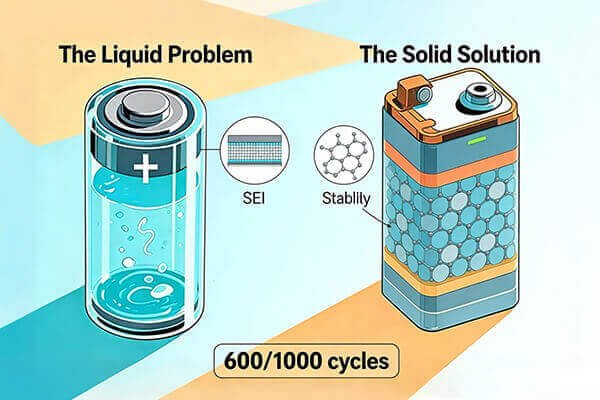
- The Liquid Problem: In a standard LiPo, the liquid electrolyte is chemically active. Every time you charge and discharge, a tiny amount of that liquid reacts with the electrodes. It creates a "film" (SEI layer) that gets thicker and thicker, eventually blocking the flow of energy. This is why your old batteries feel "weak."
- The Solid Solution: Solid electrolytes are chemically stable. They do not eat away at the anode in the same way. The side reactions are minimized.
- The Data: In our industry, we see data from partners (like Foxconn and others) showing semi-solid batteries passing 600 cycles with over 80% capacity remaining. In my own factory testing at KKLIPO, we aim for 1,000 cycles for our future solid-state lines. This means one solid-state battery could do the work of two or three standard batteries over its lifetime.
Comparative Lifespan Data:
| Battery Type | Typical Cycle Life (to 80% Capacity) | Main Failure Mode |
|---|---|---|
| Standard LiPo (High C) | 300 - 500 | Electrolyte decomposition, Puffing |
| Semi-Solid (Current Tech) | 500 - 800 | Slow capacity fade |
| Full Solid State (Future) | 1,000 - 3,000 | Mechanical fatigue (interface issues) |
Do environmental factors affect solid state batteries differently?
Heat is the number one killer of drone batteries. If you fly in Dubai or Texas in the summer, you know that leaving a LiPo in the sun can ruin it instantly.
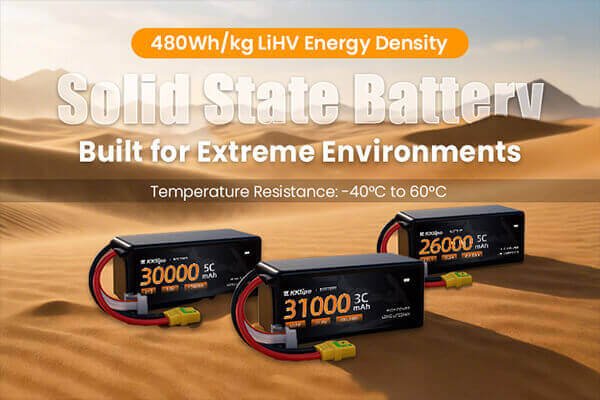
Solid-state batteries are far more resistant to extreme temperatures, which directly translates to a longer service life. Unlike liquid electrolytes that boil, degrade, or swell in high heat (above 60°C), solid electrolytes remain stable, preventing the premature aging that plagues standard batteries in hot climates.
Why Temperature Matters for Lifespan You might think a battery dies only from usage, but it also dies from stress.
- Heat Damage: In a standard LiPo, once the internal temperature hits about 60°C (140°F), the liquid electrolyte starts to break down rapidly. It produces gas, causing the battery to "puff" or swell. Once a battery is puffed, it is dangerous and must be thrown away, even if it only has 50 cycles on it.
- The Solid Advantage: Solid materials (ceramics or polymers) handle heat much better. They don't turn into gas. This means you can fly on hot days without permanently damaging the battery's internal structure.
- Cold Storage: On the flip side, freezing temperatures can cause lithium plating in standard batteries during charging, which kills them instantly. Solid-state designs are often more robust against this, meaning they survive storage in unheated warehouses in places like Russia far better than liquid cells. For a user like Omar, this environmental ruggedness means his inventory doesn't spoil just because the warehouse AC failed.
Is the higher cost justified by the longer life?
We all look at the price tag first. Solid-state batteries are currently much more expensive than standard ones, and it is natural to wonder if they are worth the investment.
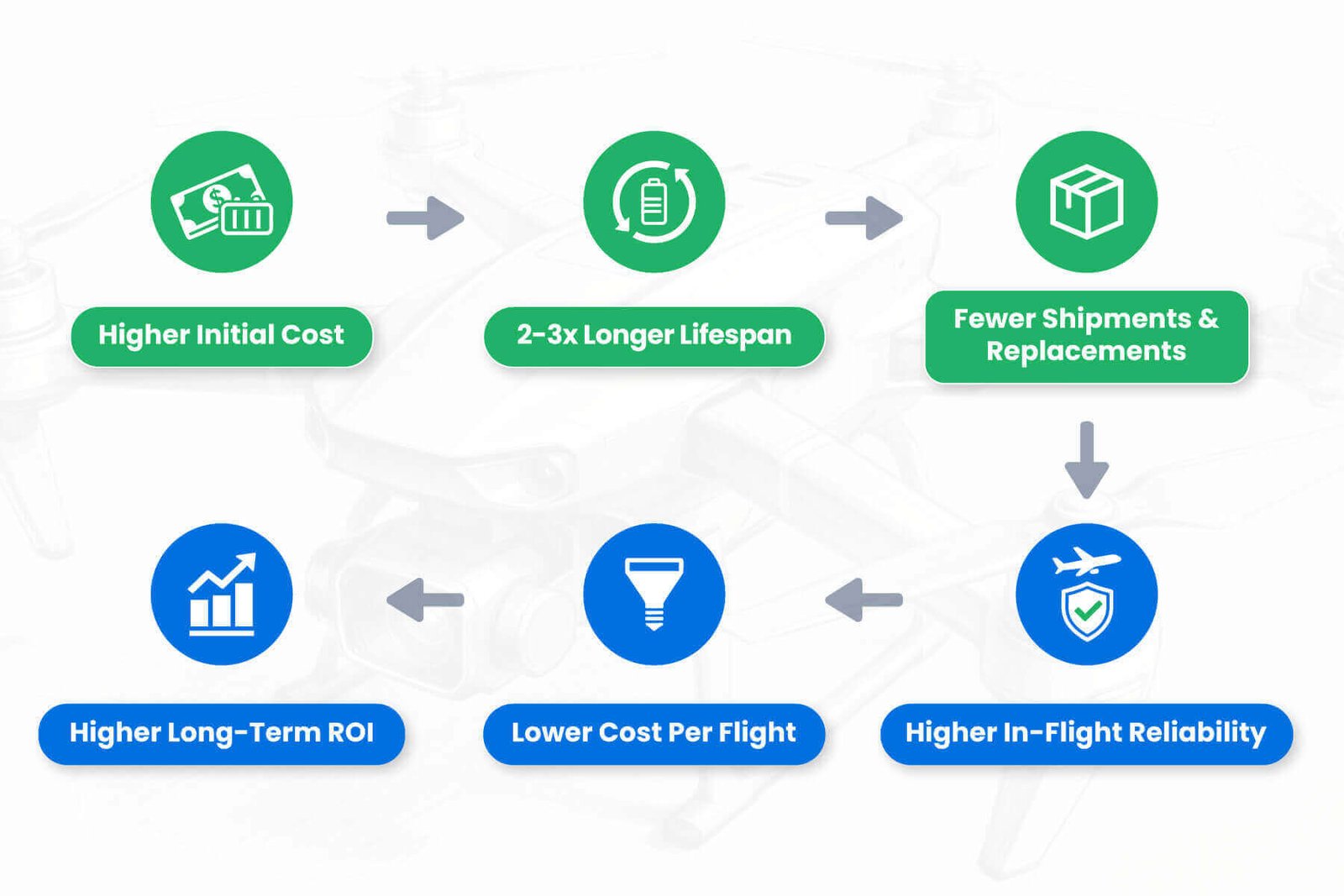
Yes, if you calculate the "Cost Per Cycle," solid-state batteries can actually be cheaper in the long run. Although the upfront purchase price is higher, the fact that they last 2-3 times longer means you buy fewer replacements, reduce shipping costs, and minimize the downtime associated with failed battery packs.
Doing the Math on ROI (Return on Investment) Let's break this down simply.
- Scenario A (Standard LiPo): You buy a pack for $100. It lasts 300 flights. Your cost is $0.33 per flight.
- Scenario B (Solid State): You buy a pack for $250 (high initial cost). It lasts 1,000 flights. Your cost is $0.25 per flight.
Hidden Savings: Beyond just the sticker price, there are logistics.
- Shipping: Shipping lithium batteries is dangerous and expensive (Class 9 Dangerous Goods). Every time you have to replace a dead fleet of batteries, you pay heavy shipping fees. Buying a longer-lasting battery means you ship less often.
- Reliability: A battery that fails mid-flight costs you a drone. Solid-state batteries don't just live longer; they fail more predictably. They don't tend to suffer from sudden "voltage sag" or catastrophic swelling.
- Shelf Life: If you buy a batch of LiPos and don't use them for two years, they degrade on the shelf. Solid-state batteries have a lower self-discharge rate. You can leave them in storage for 5 years and they will still be healthy when you wake them up. This is crucial for military or emergency response teams who might not fly every day but need gear ready instantly.
Conclusion
While solid-state batteries cost more upfront, their ability to survive 1,000+ cycles and resist extreme heat makes them a cheaper, longer-lasting solution for professional operations over the span of 5 to 10 years.