


You need to spec a battery pack, but see different voltages listed for 18650 cells. Choosing the wrong one can damage expensive equipment or severely reduce your product's performance.
The nominal voltage of a standard 18650 lithium-ion battery is 3.6V or 3.7V. However, its actual voltage is a range, starting from a full 4.2V charge and dropping to a cut-off of around 3.0V as it is used.
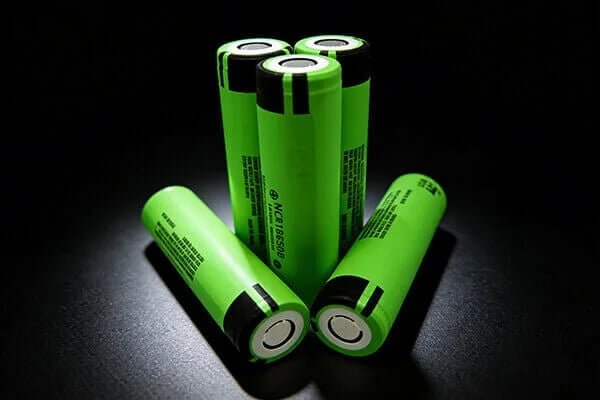
This voltage range isn't just a technical detail; it's fundamental to how the battery performs and how you must manage it. As a procurement manager, understanding these different voltage points is the first step to designing or sourcing a safe and reliable battery pack. In my work at KKLIPO, we build our entire Battery Management System (BMS) logic around this voltage curve. It is the language of the battery.
Why Isn't the Voltage Just One Number?
You see 3.7V on the label, but your multimeter reads 4.2V. This is confusing. It can make you question if your battery, or even your charger, is faulty.
The 3.7V on the label is the "nominal" or average voltage. A battery's voltage is not static; it decreases as it discharges. A full battery is 4.2V, an empty one is around 3.0V, and it spends most of its working life near 3.7V.
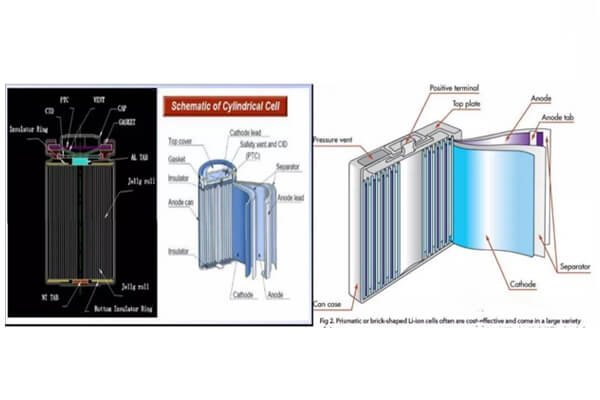
Think of the battery's voltage like the pressure in a water tank. It's highest when the tank is full and lowest just before it runs dry. The "nominal" voltage is like the average pressure during use. We can break this down into three key states that are critical for any engineer or technician to understand.
The Three Key Voltage States
Every battery pack we design is programmed to operate within these three points.
-
1. Fully Charged Voltage (4.2V) This is the peak voltage right after the battery finishes charging. The charger's most important job is to stop charging precisely when the cell hits 4.2V. Pushing the voltage even slightly higher can cause permanent damage and create a serious safety risk.
-
2. Nominal Voltage (3.7V) This is the "average" working voltage. If you look at the discharge curve, you'll see the voltage drops fairly quickly from 4.2V. Then, it stays on a long, flat plateau around 3.7V for most of the discharge cycle. Because the battery spends most of its time in this range, it's used as the standard voltage for labeling and calculations.
-
3. Cut-off Voltage (~3.0V) This is the "empty" point. Discharging a lithium-ion cell below this voltage can cause irreversible damage to its internal chemistry. Every Battery Management System (BMS) is programmed with a cut-off threshold to disconnect the battery and protect it from this damage.
Do All 18650 Batteries Have the Same Voltage?
You found 18650 cells listed with a 3.2V nominal voltage. Using these in a system designed for 3.7V cells could lead to equipment malfunction, incorrect power readings, or even damage.
No, not all 18650 cells have the same voltage. While most are 3.7V, there is another common type called Lithium Iron Phosphate (LiFePO4 or LFP) which has a nominal voltage of 3.2V. These two chemistries are not interchangeable.
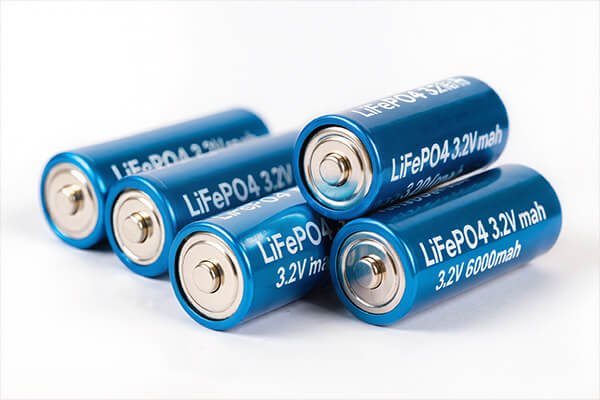
As a procurement manager, mistaking these two chemistries can be a costly error. Your charger and BMS must be specifically configured for the chemistry you are using. I've seen clients in the past try to use a standard 4.2V charger on a LiFePO4 pack, which is a recipe for disaster. The charger will never stop because it's trying to reach a voltage the battery can never safely achieve.
Chemistry Determines Voltage
Here is a clear breakdown you can use to avoid this mistake.
| Feature | Standard Li-ion (NMC/NCA) | LiFePO4 (LFP) |
|---|---|---|
| Nominal Voltage | 3.6V / 3.7V | 3.2V |
| Full Charge Voltage | 4.2V | ~3.65V |
| Cut-off Voltage | ~3.0V | ~2.5V |
| Key Advantage | Higher Energy Density | Superior Safety & Cycle Life |
| Best For | Drones, Laptops, EVs | Solar Storage, Industrial Equipment |
The choice depends entirely on your priority. For drones, where weight is everything, the higher energy density of standard Li-ion is usually preferred. For stationary storage where safety and longevity are paramount, LiFePO4 is the better choice.
How Can Voltage Tell Me the Battery's Charge Level?
Your drone is in the air, but the battery indicator is dropping fast. You need a reliable way to know how much flight time you actually have left before a critical failure.
A battery's resting voltage is a good rough indicator of its State of Charge (SoC). A reading of 4.2V means it's 100% full, while 3.7V is roughly 50% full. However, this relationship is not linear and requires a proper BMS for an accurate percentage.

You can get a rough idea of the remaining charge just by measuring the open-circuit voltage (when the battery isn't connected to a load). This is a quick check we do in the lab all the time before testing a pack. However, you must be aware that the voltage drops when the battery is being used. This effect, known as "voltage sag," means a reading in-flight will be lower than a resting reading.
A Guide to Estimating State of Charge (SoC)
Here is a very general guide for a standard 3.7V Li-ion cell's resting voltage:
- 4.20V: ~100%
- 4.00V: ~80%
- 3.80V: ~60%
- 3.70V: ~50%
- 3.50V: ~20%
- 3.00V: 0% (Time to charge immediately!)
A sophisticated Battery Management System (BMS) does much more than just read voltage. It uses a technique called "coulomb counting" to track the exact amount of energy flowing in and out of the battery. This provides a much more accurate SoC percentage, which is critical for industrial drone operations where mission success depends on precise data.
Conclusion
The nominal voltage of a standard 18650 is 3.7V, but its working range is 4.2V to 3.0V. Always verify the cell's chemistry to ensure you have the correct voltage.