


You are shopping for a new battery for your high-performance drone, and you see two options: a 50C and a 100C battery. The 100C is more expensive, but is it worth the extra cost, or is it just marketing hype?
The primary difference is the maximum continuous current the battery can safely deliver. A 100C battery can discharge twice as much power as a 50C battery of the same capacity without overheating or sagging in voltage. This translates to punchier acceleration, cooler operation, and less voltage sag under heavy load.
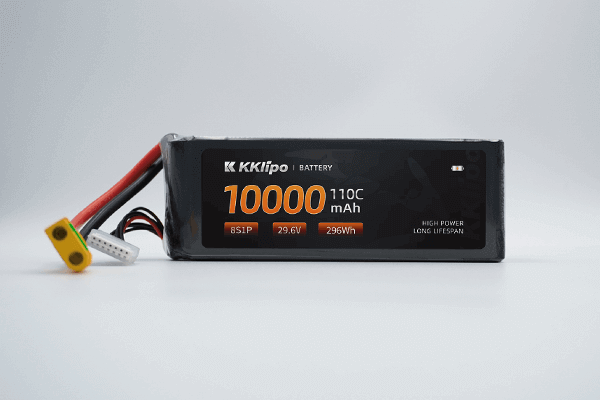
As a manufacturer, I can tell you that the "C" rating is not just a sticker; it reflects the internal chemistry and construction of the battery. For a procurement manager like Omar who needs batteries that won't fail in the desert heat, understanding this difference is crucial. Let's break down the math and the real-world impact.
How do you calculate the actual power difference?
It's easy to say "twice the power," but what does that look like in real numbers? You need to know how to translate the C-rating into Amps to understand if a battery can handle your specific motors.
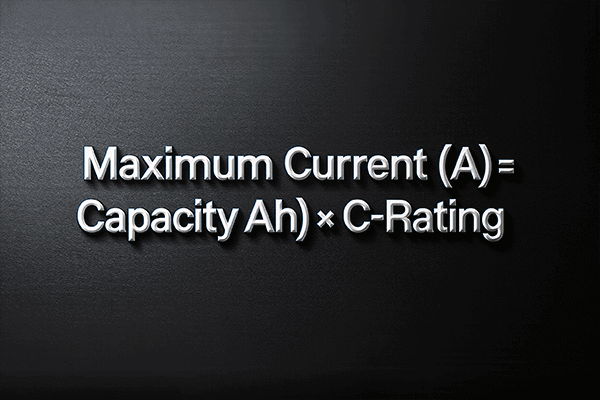
To find the maximum safe continuous amperage, you multiply the battery's capacity in Amp-hours (Ah) by the C-rating. This simple formula reveals the true power potential of any LiPo battery.
Let's use a standard 2200mAh (2.2Ah) battery as our example.
-
For the 50C Battery:
2.2Ah × 50 = 110 AmpsThis battery can push 110A continuously. That's enough for most standard drones and RC cars. -
For the 100C Battery:
2.2Ah × 100 = 220 AmpsThis battery can push a massive 220A continuously. This is huge power, reserved for extreme performance.
Why This Matters for Omar: If Omar is sourcing batteries for a heavy-lift agricultural drone that pulls 150A at takeoff, the 50C battery (rated for 110A) will overheat, puff up, and fail very quickly. The 100C battery (rated for 220A) will handle the load easily, run cooler, and last much longer.
Does a higher C-rating actually improve performance?
So, the 100C battery can deliver more amps, but does that mean your drone will actually fly faster? Or is it like putting race fuel in a minivan?
Yes, a higher C-rating improves performance, primarily by reducing "voltage sag." When you throttle up, a 100C battery maintains a higher voltage than a 50C battery, resulting in snappier acceleration and more consistent power throughout the flight.
The "Sag" Effect: Imagine trying to drink a thick milkshake through a straw.
- 50C Battery: It's like a thin straw. When you suck hard (full throttle), the flow is restricted. The voltage drops, and the motors don't get the full punch they need. The drone feels "mushy."
- 100C Battery: It's like a wide boba tea straw. The flow is unrestricted. When you punch the throttle, the power is instant. The voltage stays high, and the drone reacts immediately.
Heat is the Enemy: A 50C battery pushed to its limit gets hot—dangerously hot. A 100C battery doing the same work stays cooler because it has lower internal resistance. For industrial applications in hot climates like the Middle East, cooler running batteries are essential for safety and longevity.
Is 100C always the better choice?
If 100C offers more power and runs cooler, shouldn't everyone just buy the highest C-rating possible? Is there any reason to stick with a 50C battery?
No, 100C is not always better. Higher C-rated batteries are typically heavier, larger, and more expensive. If your application doesn't demand extreme current (like a long-range survey drone), the extra weight of a 100C battery will actually reduce your flight time.

The Weight Penalty: To achieve that 100C performance, we have to use more material inside the cells (thicker tabs, denser chemistry). This adds weight.
- Racing Drone: Needs the 100C punch. The short flight time is worth the explosive power.
- Endurance Drone: Needs to fly for 45 minutes. The motors draw low amps. A 50C (or even lower) battery is lighter, allowing the drone to fly longer.
The Cost Factor: 100C batteries use premium materials and stricter manufacturing processes, making them significantly more expensive. For a training fleet or casual flying, 50C is far more cost-effective.
| Feature | 50C Battery | 100C Battery |
|---|---|---|
| Power Output | Moderate / High | Extreme |
| Voltage Stability | Good | Excellent (Less Sag) |
| Heat | Runs Warmer | Runs Cooler |
| Weight | Lighter | Heavier |
| Cost | Budget Friendly | Premium Price |
| Best For | Training, Long Range, Cruising | Racing, Freestyle, Heavy Lift |
Conclusion
A 100C battery delivers double the continuous amperage of a 50C battery, offering less voltage sag and cooler operation for high-power applications. However, for low-draw setups, a 50C battery is lighter and more cost-effective. Choose based on your specific power needs.