


Your organization is expanding into FPV operations, but pilots are complaining about poor performance and short flight times. The batteries you procured for your standard drones are clearly not cutting it, wasting money and causing frustration.
The best battery for an FPV drone is a high-performance Lithium Polymer (LiPo) pack that is specifically matched to the pilot's flying style. The choice depends entirely on balancing weight, power output (C-rating), and capacity (mAh) for racing, freestyle, or long-range flight.

As a solutions provider specializing in high-performance power, we know that FPV is a different world. Unlike a stable industrial drone, an FPV quad demands instantaneous, massive bursts of power. For a procurement manager like you, Omar, understanding these unique requirements is the key to sourcing products that deliver a competitive edge and ensure pilot satisfaction. Choosing the right battery isn't about finding a single "best" one; it's about building a portfolio of solutions for different applications.
How do you match a battery to a specific flying style?
You have pilots with different missions—some are training on race tracks, others are capturing cinematic footage. A one-size-fits-all battery is inefficient, leading to either overweight drones or underpowered performance.
You must align the battery's key specifications with the mission's primary goal. Racers need maximum power and minimum weight, freestyle pilots need a durable balance of power and flight time, and long-range pilots prioritize capacity above all else.
The demands of each FPV discipline are unique, and so are the ideal batteries. At KKLIPO, we engineer different battery lines precisely for these scenarios. For a procurement professional, understanding this segmentation is crucial for making cost-effective and performance-oriented purchasing decisions. A pilot trying to win a race with a heavy, high-capacity battery will fail, just as a pilot trying to fly for 10 minutes with an ultralight race battery will be disappointed. You need to equip them with the right tool for the job. This table breaks down the core selection criteria based on the most common FPV flying styles.
| Flight Style | Recommended Voltage | Capacity (mAh) | C-Rating (Continuous) | Core Objective & Rationale |
|---|---|---|---|---|
| FPV Racing | 4S - 6S | 1050 - 1300 | 100C - 150C+ | Maximum Power, Minimum Weight. Racers need instant, explosive power to accelerate out of corners. A high C-rating ensures the battery can deliver this power without voltage sag. Low capacity keeps the drone light and agile. |
| Freestyle | 4S - 6S | 1050 - 1500 | 95C - 150C | Balanced Power & Durability. Freestyle involves a mix of aggressive acrobatics and smooth cruising. The battery must provide high-power bursts while having enough capacity for a 3-5 minute flight. It's the ultimate compromise. |
| Long-Range / Cinematic | 4S - 6S | 1500 - 3000+ | 50C - 95C | Maximum Flight Time. The goal is endurance. A higher capacity (mAh) is the priority. Since the flight style is smoother, an extremely high C-rating is less critical, allowing for a heavier but longer-lasting battery. |
What do the key battery specifications actually mean?
You're looking at spec sheets filled with terms like 6S, 1300mAh, and 120C. Without a clear understanding, you're just comparing numbers instead of performance, making it difficult to justify purchasing a more expensive but better-suited battery.
Think of it like a car engine. Voltage (S) is the horsepower, Capacity (mAh) is the size of the fuel tank, and the C-Rating is how quickly that fuel can be injected into the engine for acceleration.
As someone with an engineering background, you'll appreciate the physics behind these numbers. They are not arbitrary; they directly define the battery's performance envelope. Getting the combination right is the key to unlocking a drone's potential. Let's break them down.
-
Voltage / S-Count: This determines the raw power of the system. A single LiPo cell (1S) has a nominal voltage of 3.7V. A "6S" battery has six cells connected in series, delivering 22.2V. For the same power output, a higher voltage system draws less current (Amps). This results in higher efficiency, less heat in the components (motors, ESCs), and a more "punchy" feel for the pilot. Most modern FPV drones run on 4S or the increasingly popular 6S standard.
-
Capacity (mAh): This is simply how much energy the battery can store. A 1500mAh battery holds more energy than a 1300mAh battery. While more capacity generally means longer flight time, it always comes with a weight penalty. The art of FPV battery selection is finding the "sweet spot" where you have enough flight time without making the drone feel heavy and unresponsive.
-
Discharge Rate (C-Rating): This is the most critical spec for FPV performance. It tells you how fast the battery can safely discharge its stored energy. The maximum continuous current is calculated as:
Current (A) = Capacity (Ah) x C-Rating. For example, a 1.3Ah (1300mAh) battery with a 100C rating can theoretically deliver 130 Amps of current. A high C-rating prevents the battery's voltage from dropping or "sagging" during high-throttle maneuvers, which gives the pilot consistent power and protects the battery from damage.
Is a higher C-Rating always the better choice?
You want to provide your pilots with the best possible performance, so it seems logical to just buy the batteries with the highest C-Rating. However, this could lead to overspending on features your pilots may not even need.
Not always. A C-Rating should be treated as a "capability" rating. While a higher C-rating is crucial for preventing voltage sag in demanding applications, choosing one that far exceeds the drone's actual power draw adds unnecessary cost and weight without any performance benefit.
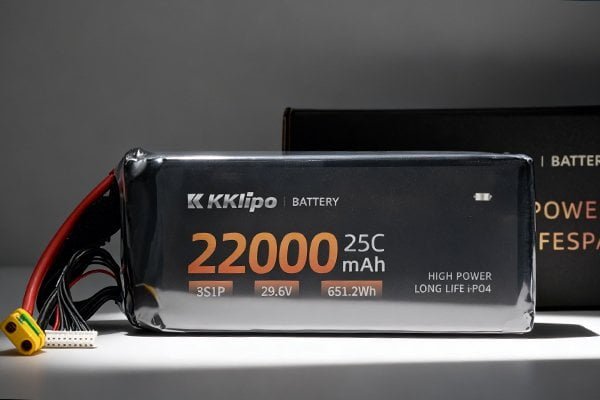
This is a common question, and it's where a deep understanding of power systems adds significant value. While a low C-rating is dangerous and will lead to poor performance and battery damage, an excessively high one is inefficient from a procurement standpoint. The C-rating number is often used as a marketing tool, and not all ratings are created equal. The true performance is reflected in the battery's internal resistance and its ability to hold voltage under the specific load of your drone. A top-tier 100C battery from a reputable manufacturer like KKLIPO will often outperform a budget battery that claims a 130C rating.
Your goal should be to match the C-rating to the application. For a training quad used by beginners, a 75C-95C battery might be perfectly adequate. For a professional freestyle pilot's main quad, a 120C+ battery is essential. Buying a 150C battery for the training quad is a waste of money because the drone's motors will never draw enough current to utilize that capability. The extra cost and slight weight increase of the higher-rated battery provide no tangible benefit. The smart procurement strategy is to analyze the actual power needs of your fleet and source the battery that meets that need with a safe margin, rather than simply chasing the highest number on the label.
Conclusion
Selecting the right FPV battery is a strategic decision. It requires matching the voltage, capacity, and C-rating to the specific flight style to ensure optimal performance, flight time, and long-term value for your operations.