


You're designing a new drone or upgrading an existing one, and the battery choice is critical. You see two popular cylindrical cell formats, 18650 and 21700, and you need to know which will give you the best performance. Is bigger always better?
For most modern, high-performance drones, the 21700 cell is the superior choice. It offers higher energy density and greater discharge capability in a single cell, leading to longer flight times and better power delivery. The 18650 remains relevant only for smaller, lightweight builds where space and weight are the absolute primary constraints.
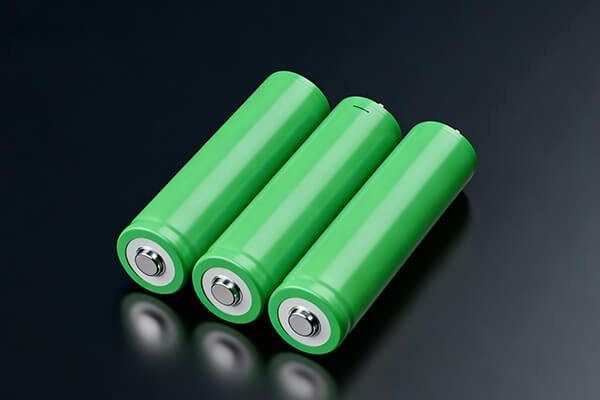
As a battery manufacturer, we work with these cells every day. We see the clear trend in the industry moving towards the 21700 format for any new, demanding application. For a procurement manager like you, Omar, who needs to source the best possible power solutions for industrial drones operating in harsh environments, understanding the technical advantages of the 21700 is key to ensuring performance and reliability.
Why does a slightly larger size make such a big difference?
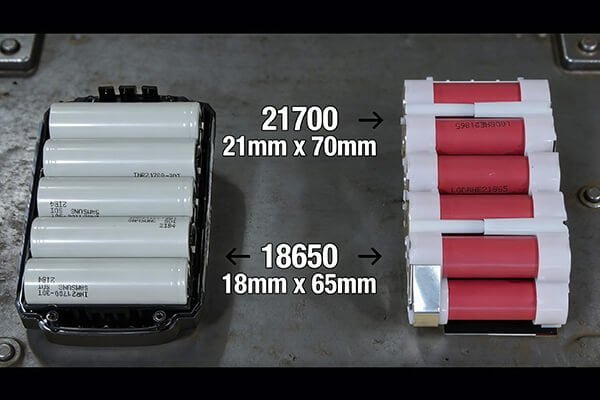
You look at the two cells. The 21700 is only 3mm wider and 5mm taller. It seems like a small change. How can this minor size increase result in such a significant performance boost for a drone?
The larger volume of the 21700 cell allows for more active chemical material, directly increasing its capacity (mAh) and its ability to discharge current (Amps) without overheating. This volumetric advantage means a single 21700 cell can do the work of nearly two standard 18650s, but with less internal resistance and better thermal management.
It's a simple matter of physics. More volume equals more energy storage potential. Drones are incredibly power-hungry, especially during takeoff, climbs, and high-speed maneuvers. The 21700's larger physical format is simply better suited to handle these high-current demands. It can deliver more power with less stress on the cell, which translates to less voltage sag, more stable performance, and a longer overall lifespan for the battery pack.
Core Parameter Comparison:
| Feature | 🔋 18650 Cell | 🔋 21700 Cell | Impact on Drones |
|---|---|---|---|
| Dimensions | 18mm x 65mm | 21mm x 70mm | Requires a larger, specifically designed battery compartment. |
| Typical Capacity | 2500 - 3500 mAh | 4000 - 5000 mAh | Longer Flight Time. Higher capacity directly translates to more endurance. |
| Typical Weight | ~48g | ~70g | While heavier per cell, the pack might be lighter overall for the same energy. |
| Energy Density | Good (~250 Wh/kg) | Excellent (~300 Wh/kg) | The 21700 packs more power per gram, which is the most critical metric for aviation. |
| Discharge Rate | Limited in high-capacity models | Higher. Can sustain high amp draw with less heat and voltage sag. | Better for aggressive flying and heavy-lift industrial drones. |
When would you still choose 18650 cells for a drone?
The technical specs clearly favor the 21700. So, is there any reason left to use the older 18650 format in a drone build? Are there specific scenarios where the smaller, lighter cell is still the champion?
The 18650 cell is still a viable choice for ultra-lightweight drones, such as small FPV racers or long-range "cruiser" builds where minimizing every single gram is the primary design goal. Its smaller diameter and lower weight can be advantageous in very compact airframes.
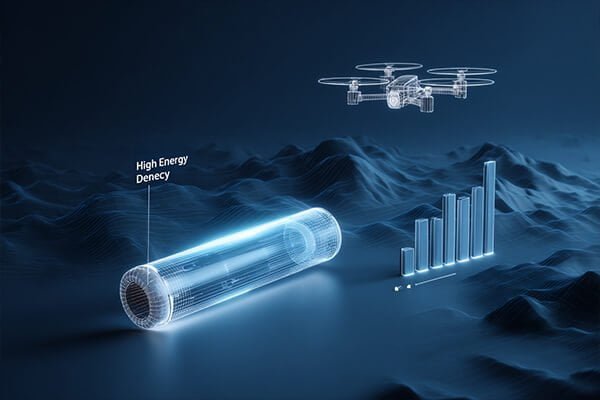
In the world of competitive FPV or specialized long-range flying, pilots often build their own battery packs to fit a specific, highly optimized airframe. In these cases, the slender profile of the 18650 can allow for more aerodynamic pack designs. Furthermore, if a drone's power requirements are relatively low, the high-discharge capabilities of the 21700 might be overkill. For these niche applications, a high-quality 18650 pack can provide a perfectly balanced solution of weight, power, and flight time. However, for almost all commercial, industrial, and prosumer applications, the benefits of the 21700 far outweigh these niche advantages.
How does cell choice affect performance in extreme temperatures?
Your operations span the scorching heat of the UAE and the freezing winters of Russia. Battery performance plummets in the cold. Does the cell format, 18650 vs. 21700, have an impact on reliability in these challenging environments?
Yes, the newer chemistry and robust construction of modern 21700 cells often give them a significant advantage in extreme temperatures. High-quality 21700s are designed with better thermal stability, allowing them to operate more efficiently and safely at both high and low temperature extremes compared to older 18650 designs.
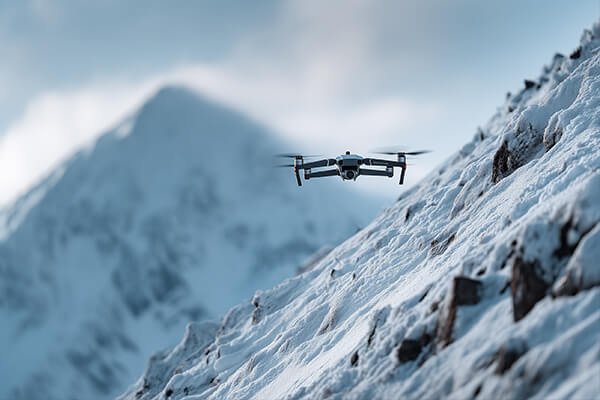
This is a critical point for industrial users. In cold weather, a battery's internal resistance increases, causing its voltage to drop dramatically under load. The superior discharge capability of the 21700 helps to mitigate this effect, providing more stable and reliable power when it's needed most. Some specialized 21700 cells are specifically engineered for wide temperature ranges, retaining over 70% of their capacity even at -40°C. For any operation where reliability in harsh conditions is a factor, sourcing drones or battery packs built with industrial-grade 21700 cells is a crucial step to ensure mission success.
Conclusion
For drones, the 21700 cell is the clear winner for performance, flight time, and power delivery. The 18650 is only suitable for niche, ultra-lightweight builds. For professional and industrial use, the 21700 standard provides a more robust and capable power solution.