


Asking whether a 1C battery is better than a 0.5C battery is like asking if a sprinter is better than a marathon runner—it depends entirely on the race you are running.
There is no absolute "better" choice; it depends on your application. A 1C battery is designed for moderate power output, suitable for standard electronics, while a 0.5C battery is optimized for long duration and stability, making it ideal for energy storage systems where endurance matters more than speed.
As a battery manufacturer, I see clients confuse this rating all the time. Choosing the wrong "C" rating is the fastest way to either overheat your battery or overpay for performance you don't need. Let's clarify what these numbers actually mean for your equipment.
What exactly does "C" mean in battery terms?
Before you can choose, you need to understand the math behind the letter. It is the key to unlocking the true potential of your power source.
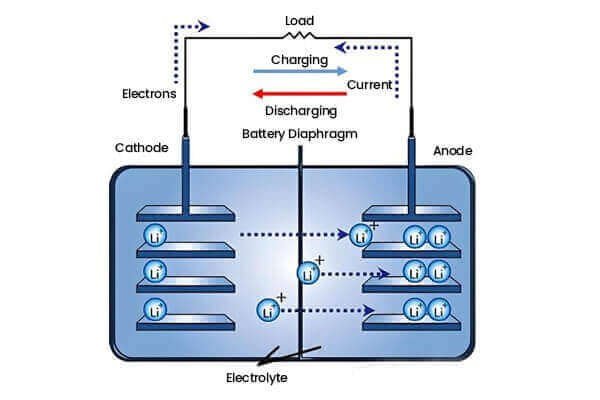
"C" stands for Capacity Rate (or C-rate), which measures how fast a battery can be charged or discharged relative to its total capacity. A 1C rate means the battery will fully discharge in one hour, while a 0.5C rate means it will take two hours to drain completely.
The Simple Math Imagine you have a battery with a capacity of 2000mAh (2Ah).
- At 1C: You draw current equal to the capacity (2 Amps). It lasts 1 hour.
- At 0.5C: You draw half the capacity in current (1 Amp). It lasts 2 hours.
So, the C-rating tells you the maximum safe speed limit for energy flow. A higher number means a bigger pipe for the energy to flow through.
When should I choose a 1C (or higher) battery?
If your device needs to move fast, lift heavy loads, or react instantly, you cannot afford a bottleneck in your power supply.
Choose a 1C (or higher) battery when your device demands high power output, such as in drones, power tools, or electric vehicles. These applications require "burst" energy to accelerate motors or heat elements, which a lower-rated battery simply cannot provide without overheating.

The "Sprinter" Battery In my factory at KKLIPO, we build high-C batteries for clients like Omar who need their drones to fight strong winds. If a drone motor needs 50 Amps to climb, but you use a low-C battery that can only give 20 Amps, the drone will crash.
- Typical 1C+ Uses: Power tools (drills), RC hobbies, drones, electric skateboards.
- Trade-off: To make the electricity flow that fast, we have to use thicker internal foils and different chemicals. This usually makes the battery slightly heavier and less energy-dense. It gives you power, but sacrifices a bit of runtime.
When is a 0.5C battery the smarter choice?
Sometimes, slow and steady wins the race. If you are building a system that needs to run for days rather than minutes, raw power is less important than efficiency.
Select a 0.5C battery for "endurance" applications like solar energy storage, backup power supplies (UPS), or low-power sensors. These batteries are engineered for high energy density and long cycle life, offering more total energy storage in the same physical size because they don't need robust internal wiring for high current.

The "Marathon" Battery Think of a 0.5C battery as a deep-cycle marine battery. It is designed to sip energy slowly over a long time.
- Why it's better here: Because we don't need to engineer it for high-speed electron flow, we can pack more active material inside the cell. This gives you higher capacity (mAh) for the same weight.
- Longevity: Discharging a battery slowly (at 0.5C) is much gentler on the chemistry than ripping energy out at 1C or higher. A 0.5C battery will often last for 2,000+ cycles, whereas a high-power drone battery might die after 300.
Conclusion
Choose 1C (or higher) if you need power and speed for motors; choose 0.5C if you need maximum capacity and long lifespan for steady, low-power electronics.